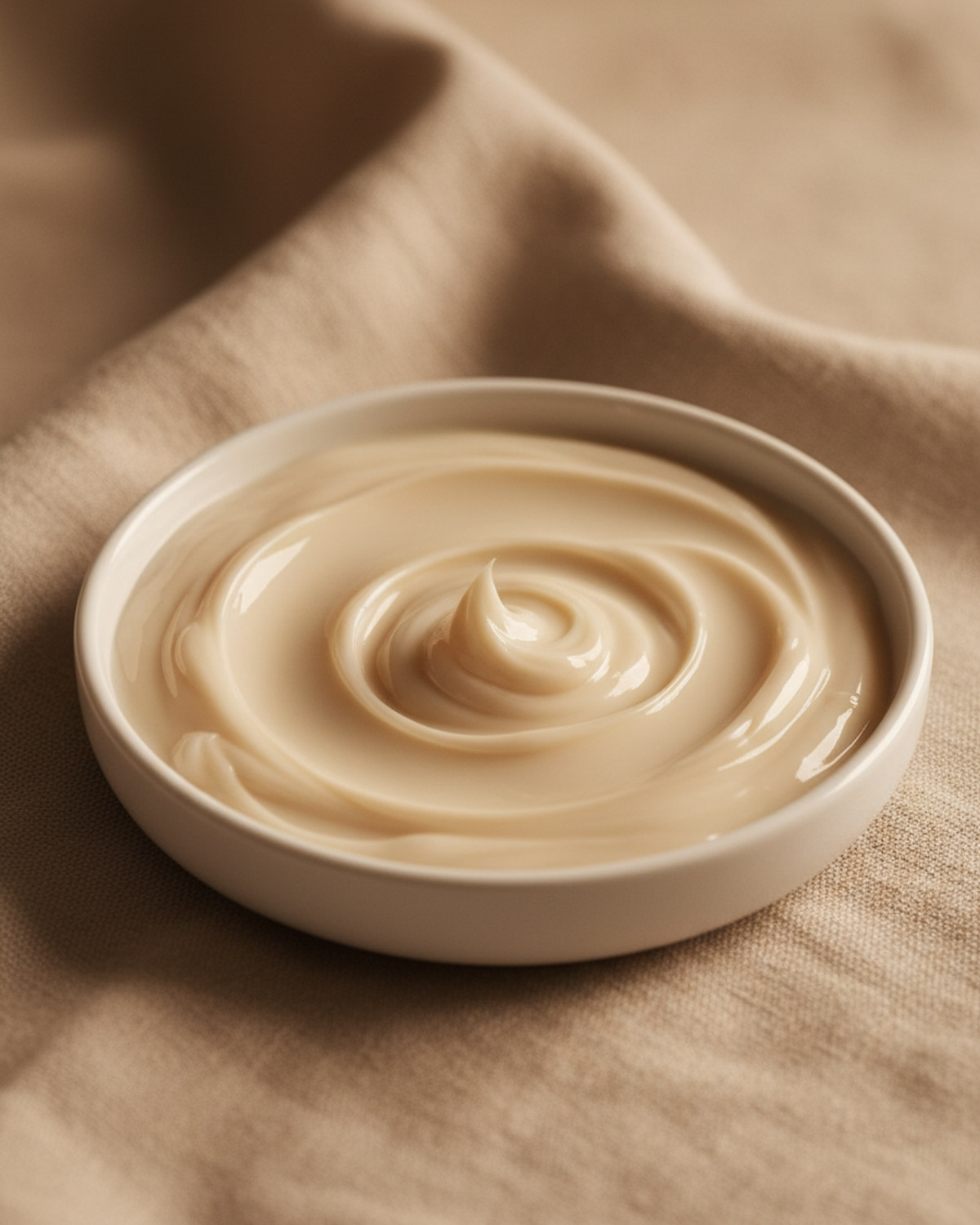
Thick balms that stay glossy are often working as designed. Here is how occlusives, emollients and oil-phase bases explain the texture, and how to adjust how you apply them.
A common complaint about balm-style barrier creams is that they sit on top of the skin and refuse to disappear. People assume the product is defective, too heavy, or somehow not working. In most cases it is behaving exactly as designed. This guide explains why some moisturizers stay on the surface, what the texture tells you about the formula, and how to adjust your routine without abandoning a product you may otherwise like.
'Sinking in' is not the goal for every ingredient
Moisturizers are usually grouped by how they work. A review of moisturizer mechanisms describes the main classes as occlusives, humectants, emollients and protein rejuvenators, and notes that commercial products typically combine several of them. A more recent review describes the roles in plain terms: occlusives sit on the surface of the stratum corneum, humectants draw water into the outer layer, and emollients assimilate into the stratum corneum.
Only one of those three is supposed to feel like it vanishes. An occlusive that sinks fully into skin would not be doing its job of slowing water loss from the surface. That is why richly occlusive balms can leave a visible, slightly tacky film. The finish is a design feature of the category, not proof that the product is failing.
Reading the texture as a clue
Because the classes behave differently, the feel of a product on your hands can hint at its balance:
- A light, watery gel is likely humectant-heavy, which means it pulls water but does little to seal it in.
- A lotion that spreads and fades usually leans on emollients that blend into the surface.
- A thick balm that stays glossy is relying heavily on occlusives that remain on top.
None of these is better in general. A review of the moisturizer category notes that most commercial products are blends, and the proportions decide the experience. If your balm refuses to absorb, it probably has a higher occlusive share than you expected from a face cream.
The vehicle matters as much as the active
Some marketing focuses on one hero ingredient, but the base the ingredient sits in shapes how it feels and how much reaches the skin. A review of topical dexpanthenol, the stable alcohol form of pantothenic acid, says its use rests on good skin penetration and high local concentrations when delivered in an adequate vehicle, such as a water-in-oil emulsion. It also describes dexpanthenol as acting like a moisturizer, improving stratum corneum hydration, reducing transepidermal water loss and maintaining softness and elasticity.
A water-in-oil emulsion has an oil-rich outer phase, which is exactly why these formulas feel thick and glossy. So a product containing panthenol in that kind of base may be working as intended even when it sits on the surface.
Centella-derived ingredients are common in this product type as well. A 2023 review of asiaticoside, a major constituent of Centella asiatica, summarizes pharmacokinetic and safety findings and reports low biotoxicity, with protective properties described for skin among a range of pharmacological effects. That review is not a test of any specific cream, so it should not be read as evidence about how a given balm feels or performs on faces.
Why more product backfires
The most frequent mistake with heavy balms is using too much. A thick layer cannot absorb, so it pills when you layer sunscreen or makeup on top, rubs onto pillowcases, and can feel suffocating. The 2001 moisturizer review also lists side effects associated with moisturizers, including occlusive folliculitis, irritation and contact allergy. Those are uncommon, but they are a reason to keep a layer thin, particularly on areas that tend to look congested.
A workable approach:
- Warm a pea-sized amount between your fingertips so it spreads rather than drags.
- Press and glide instead of rubbing, working outward from the center of the face.
- Wait a minute or two before the next step, and use balms last in an evening routine, since occlusives are usually the final layer.
- Start with less than you think you need, then add a second thin layer only on areas that look tight.
When a different texture makes more sense
If you like the ingredient list but dislike the finish, you have options that follow from the mechanism. During hot or humid weeks, or if your skin looks shiny by midday, a lotion with a lighter emollient base may fit better. If your skin looks tight or flaky, a humectant serum underneath a thin balm can supply water for the balm to hold in, which matches the roles described in the barrier literature.
The practical takeaway
A balm that stays on the surface is usually an occlusive-rich, oil-phase formula doing what its category does. The remedies are small: use less, warm it up, apply it as the last step of an evening routine, and match the texture to the season. Judge it over a few weeks of consistent use rather than the first five minutes.