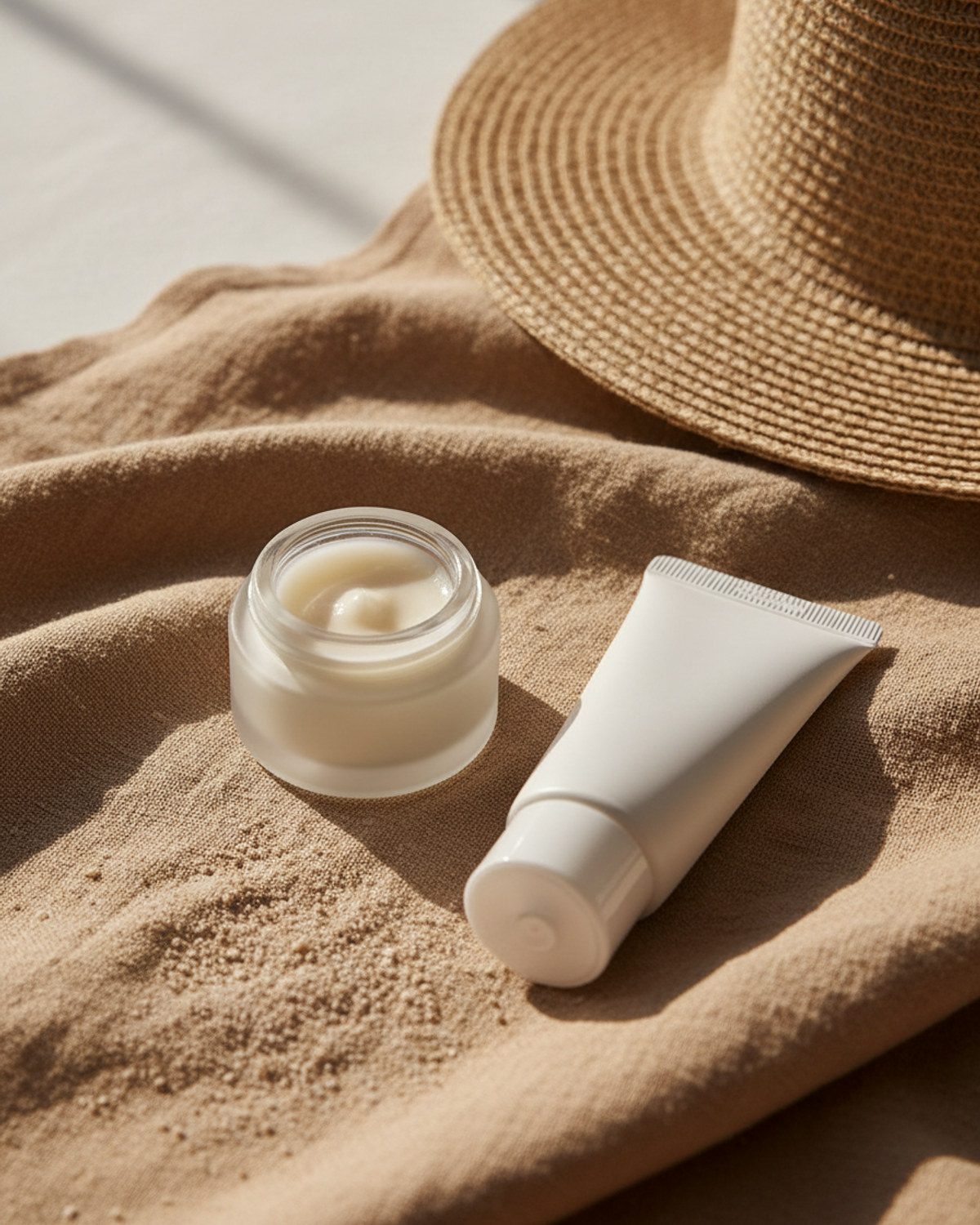
Tone-up creams are still around, but a pink brightening base is not automatically sun protection. Three label checks, grounded in FDA guidance, separate real sunscreen from makeup.
Tone-up creams, the pink, lavender or peach-tinted Korean-style products that promise an instantly brighter look, keep resurfacing in forum threads where people ask what happened to them. They did not vanish; they are still sold as sun creams and as makeup bases. The more useful question is what a given jar actually is, because a tone-up cream can be a regulated sunscreen or a cosmetic with no sun protection claim at all, and the front of the box rarely makes the difference obvious.
What tone-up means in practice
A Hwahae guide to Korean tinted sunscreens, published in March 2026, describes tinted sunscreen as a UV-protective product with a light skin-toning effect, often used as a tone-up base because it gives light complexion correction without the heaviness of foundation. It says the product does not fully cover blemishes but can improve the look of overall brightness and texture.
The same guide explains why color is added. In mineral formulas, which use zinc oxide and titanium dioxide as UV filters, the tint is mainly there to offset white cast; in chemical formulas, which use organic filters, tint mainly enhances tone and brightness with a thinner, more transparent feel. It also states that the tint itself does not weaken sun protection. Keep in mind this is a brand-side guide, so it explains the category well but is not independent testing.
Check one: is it sold as sunscreen?
In the United States, sunscreens are regulated as nonprescription drugs and must meet safety and effectiveness standards, according to the FDA. A real sunscreen carries a Drug Facts panel with an SPF value. A tone-up cream sold only as a cosmetic does not, and a pink base with a brightening claim tells you nothing about UV protection.
If sun protection matters to you, find the SPF and the words broad spectrum. The FDA advises choosing a broad-spectrum sunscreen with an SPF of at least 15 and checking the label, because not all sunscreens qualify. Products that are not broad spectrum or have an SPF below 15 must carry an alert stating they only help prevent sunburn.
Check two: how much are you really wearing?
This is where tone-up creams quietly fall short. People tend to apply them like a thin primer, a dab to even out color. The FDA says an average adult needs about one ounce to cover the body, and it lists commonly missed spots including the ears, lips, back of the neck, hands and scalp. The agency also advises applying about 15 minutes before going outside and reapplying at least every two hours.
A thin layer of a tone-up cream under makeup is unlikely to match the way a sunscreen was tested. The sources we reviewed do not quantify the gap for face products, so take this as a reason to be generous with the amount, not as a measured figure. The SPF value also reflects sunburn protection, mainly UVB, and the FDA notes it does not mean you can stay in the sun proportionally longer.
Check three: what is the tint made of?
Not every pigment does the same job. The Hwahae guide says tinted sunscreens often use iron oxides for the color. A 2026 Journal of Drugs in Dermatology review and product analysis reports that iron oxide-containing sunscreens can improve outcomes for visible light-induced pigmentation, but that most tinted sunscreens do not list iron oxide as an active ingredient. Of 37 marketed tinted sunscreens the authors examined, only a small fraction disclosed iron oxide concentrations when asked, and few supplied transparent visible light testing data.
The practical reading: a pink or lavender tone-up is designed for the look of brightness and may or may not contain meaningful iron oxide. If visible light is a concern for you, a brand that states its iron oxide content is a better bet than one that only says it brightens.
Other label details worth a glance
- Expiration date. The FDA says products without an expiration date should be considered expired three years after purchase.
- Storage. Containers carry a warning to protect them from excessive heat and direct sun. A tone-up jar left on a sunny windowsill or in a hot car is not stored as directed.
- Water resistance. No sunscreen is fully waterproof; water-resistant labels must say whether protection lasts 40 or 80 minutes.
- Ingredient changes. The FDA added bemotrizinol as a permitted ingredient in June 2026 and removed PABA and trolamine salicylate in a September 2026 order, so newer formulas may list filters older ones did not.
- Fragrance and sensitivity. If your skin looks easily flushed, patch test any tinted product on a small area first.
A quick decision guide
If you want a brighter-looking base and sun protection, choose a product that shows an SPF, says broad spectrum, and discloses its filters. If you only want a light color-correcting base, a cosmetic tone-up cream is fine, but pair it with a separate sunscreen underneath. If you are layering a tone-up cream over sunscreen, apply the sunscreen first and let it settle before the tint.
Takeaway
Tone-up creams did not go away, but the category is slippery. Read the label for three things: an SPF with the words broad spectrum, a realistic amount you will actually apply and reapply, and whether the tint is explained rather than just advertised. When a product skips those details, regard it as makeup, not sun protection, and put a real sunscreen underneath.