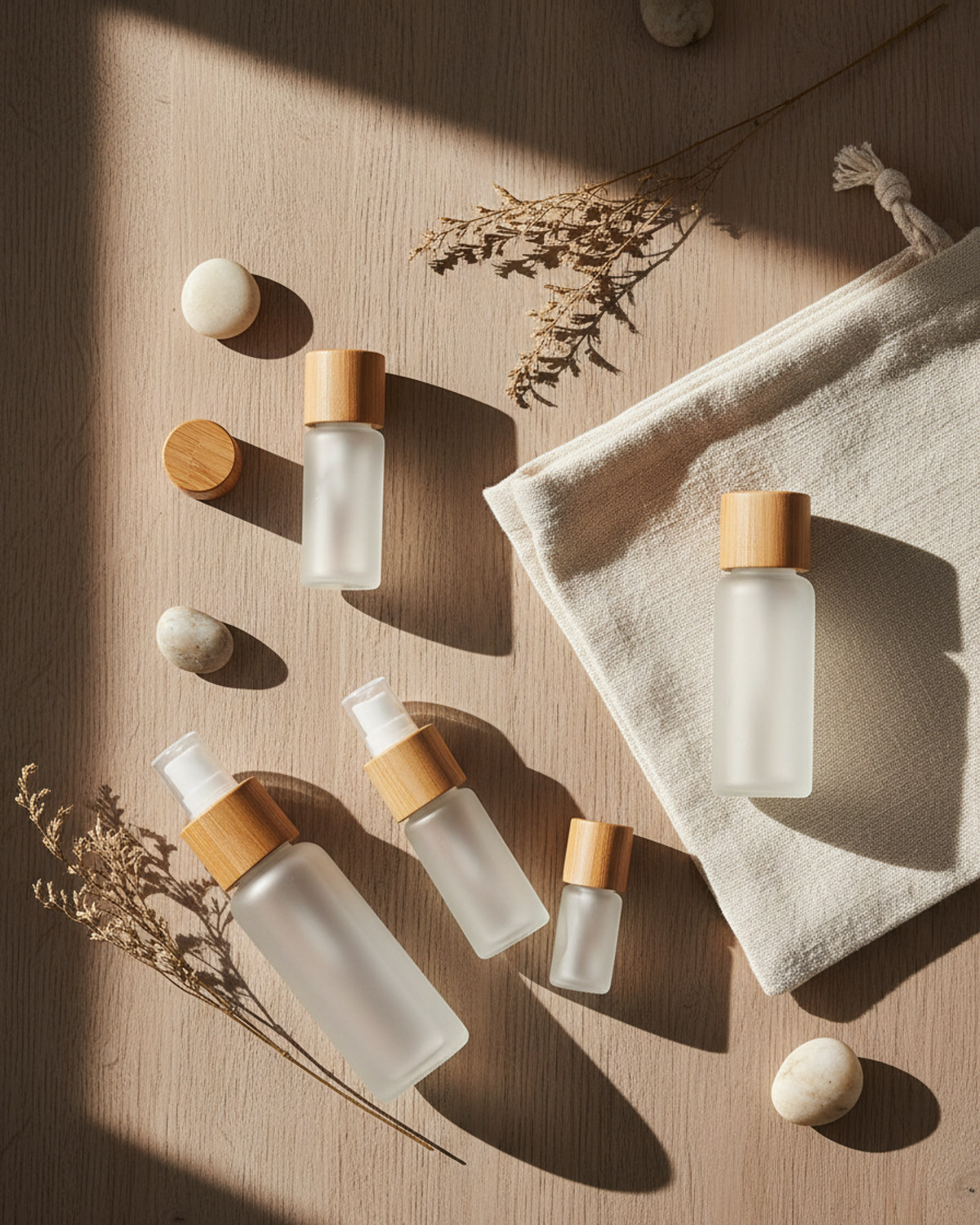
Moving a serum or cream into a mini bottle changes its closure, its light exposure and how often hands touch it. Here is what FDA guidance and stability research say, and a careful way to decant.
Decanting, meaning moving a serum, cleanser or moisturizer into a small travel bottle, is one of the most common skincare habits on social media and in travel advice. It saves weight and avoids toting full-size jars through security. It also changes three things that a manufacturer designed carefully: the container, the closure and the number of times your product meets air and fingers. Here is what published sources say about each, and how to decant with fewer downsides.
What the research does and does not cover
No source I opened tests decanting into travel containers directly. What exists is related evidence on how products are protected by their packaging and how they get contaminated in everyday use. That evidence is enough to build sensible habits, but it is not proof that any particular decanting method is safe or unsafe, and this guide avoids pretending otherwise.
Why the original package is part of the formula
A cosmetic is a system of ingredients, preservatives and packaging. FDA's microbiological safety page lists the common routes for contamination: contaminated raw materials or water, poor manufacturing conditions, weak preservation systems, inadequate packaging, and poor shipping or storage. It also lists consumer use, such as dipping fingers into a product, as a way microbes can get in. Recalls tied to microbial contamination are described there as common.
Decanting adds a transfer step where each of those pathways can appear: a spoon, spatula or fingertip, a bottle that was rinsed but not fully dried, and a new closure the formulator never tested.
What closures do
A review in the Journal of the Society of Cosmetic Chemists, adapting work by Brannan and Dille on products used by consumers, reported that some closures protect products more than others and that some may inactivate the preservative. The same material tabulated the organisms recovered after real-world use, including Enterobacter and Pseudomonas species in shampoo and a mix of yeasts, molds and Pseudomonas in skin lotion. That work looked at in-use contamination, not travel bottles, but it makes the point that the closure is not a neutral detail.
For you, that means a pump or squeeze tube that limits how much air and skin touches the product is a safer choice than a wide-mouth jar you dip into. Wider openings expose more product to the air and to hands.
Light and air matter for some actives
Stability is the other concern. A study of ascorbic acid in cream formulations found that in the dark, degradation was roughly 70 times slower than under UV light. In the dark the vitamin still degraded through aerobic oxidation, and in jars that held some air, the loss was highest in the upper layer of the cream. The same study found that ascorbic acid was most stable at pH 4 and degraded faster as pH rose toward 7. Packaging materials were not what this study tested, since it used airtight glass containers, so it supports the idea that light and air exposure matter, not any specific bottle brand.
Practically, if a product is built around a light- or air-sensitive active such as vitamin C, moving it into a clear travel bottle gives up some of the protection of the original opaque or airless package. Retinoid products and some oils raise the same question. When the label says to store the product away from light, or the container is opaque, follow that.
Which products are poor candidates
Using the sources above, these are the products where decanting asks the most of the package:
- Water-based serums and gels with minimal preservatives, because they have the least margin if contamination occurs.
- Vitamin C serums, because light and air exposure speed degradation.
- Anything near the eyes, because FDA names eye-area products among those linked to serious problems when contaminated.
- Anything that is already close to its expiration or smells different than when you opened it.
Anhydrous balms, thick creams in tubes, and simple cleansers are generally easier to travel with, because there is less water to support microbial growth, though no source here quantifies that difference.
A careful decanting routine
- Start with a clean, dry container. Wash with hot soapy water and let it air dry fully. Damp bottles are a reason to avoid decanting.
- Wash your hands first. FDA advises washing hands before application, especially before dipping fingers into a container.
- Use a clean spatula or pump, not fingers. Do not return unused product to the original jar.
- Do not dilute. FDA notes that adding water or saliva dilutes the preservatives meant to stop microbial growth.
- Label with the product name and the date. You will want to know how old the product is.
- Keep it cool and out of direct sun. Warm or damp conditions can speed microbial growth and break down preservatives, and light speeds the breakdown of some actives.
- Use it within the trip. Think weeks, not months, and discard the remainder when you get home.
When to skip it
If a product is labeled as a single-use or single-dose format, or you cannot clean the destination bottle, buy a travel-size version instead. Many brands sell them for exactly this reason, and the manufacturer has already tested the package.
If you notice a bad smell, a change in color or texture, or a reaction such as a rash, stop using the product. FDA asks people to report signs of contamination even when no reaction occurred.
The bottom line
The research does not say decanting is dangerous. It does say that packaging, hands, air and light are all part of how a product stays stable and clean. Decant only what you need, choose products that tolerate it, use clean tools and tight closures, and regard the travel bottle as short-term storage. When a product is built around a sensitive active or sits near the eyes, bring the original package or buy the mini version.