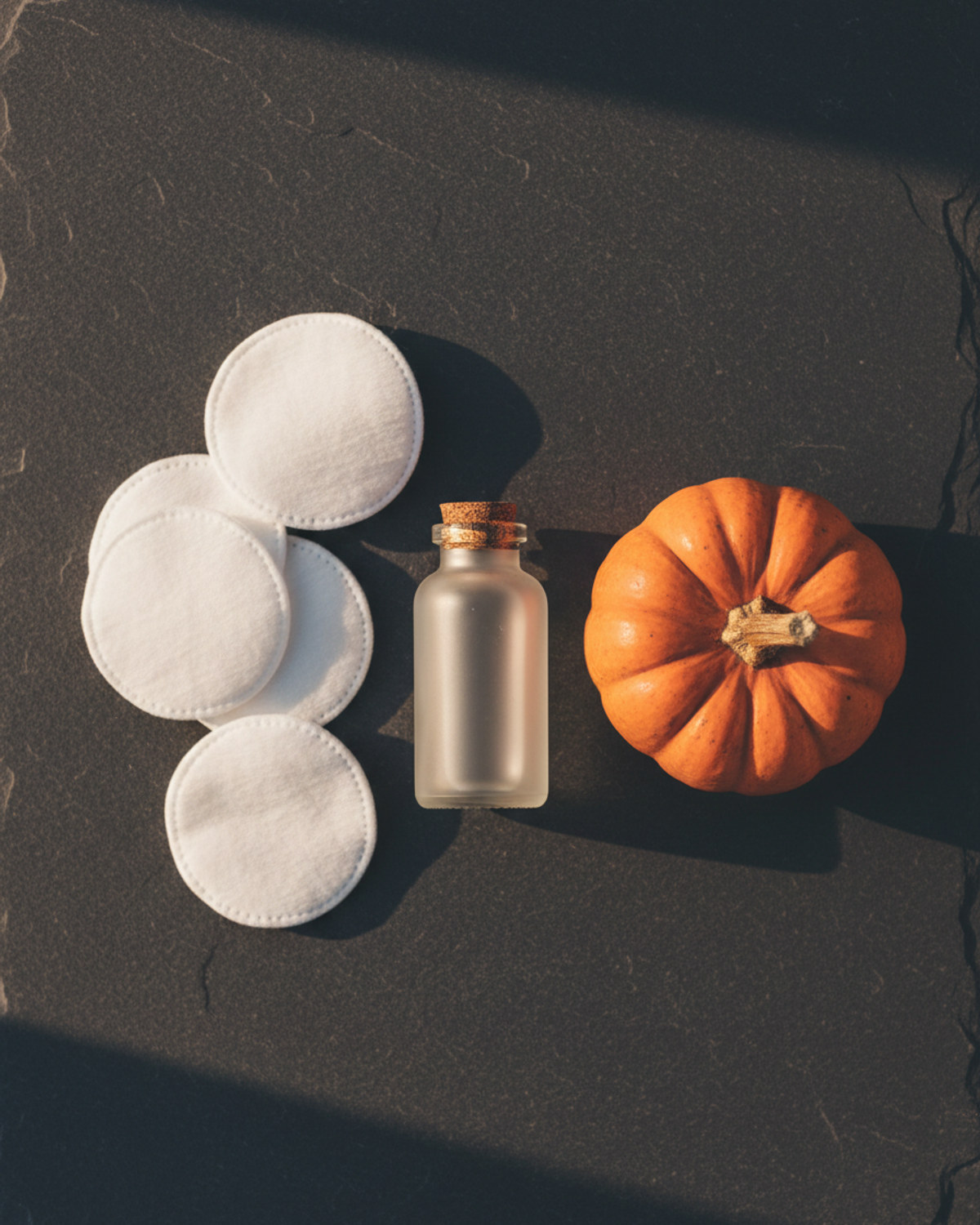
Costume makeup is not everyday makeup. Here is what FDA guidance and dermatology sources say to check before you wear it, and how to take it off without stressing your skin barrier.
Halloween night is when many people put heavier, less familiar makeup on their faces than at any other time of year, and then fall into bed. The skin-care part of the holiday is not the costume. It is what happens in the 12 hours around it: what goes on, whether it was tested, and how it comes off. This guide pulls together what the FDA and dermatology sources say, and turns it into a short checklist you can use tonight or next year.
Costume makeup is not everyday makeup
Costume and novelty makeup often differs from the foundation or lipstick you wear daily. A 2023 Dermatology Times interview with dermatology PA Renata Block notes that these products may contain artificial dyes and fragrance oils that can bother skin, are often mass produced for the season, and may carry ingredients that are unlisted or renamed. She also points to a 2016 study that found heavy metals, particularly in darker pigments.
That is a reason to be selective, not a reason to panic. The FDA's position is simple: color additives in face paints and theatrical makeup must be approved for cosmetic use. Approval is the baseline, and it is the one thing you can check yourself in about two minutes.
Check the label against the FDA color list
The FDA's novelty makeup guidance gives a concrete routine. Read the ingredient list for color names, then compare them with the agency's Summary of Color Additives. If a color in the product is not on that list, the FDA says not to use it.
Two details are easy to miss:
- Approved is not approved everywhere on the face. Even an approved color may not be cleared for use near the eyes. If a label says not for use near the eyes, follow the label even when the packaging photo shows someone wearing it there.
- Glow and fluorescent effects have limits. The FDA notes that none of the eight approved fluorescent colors may be used near the eyes, and luminescent zinc sulfide is approved only for limited use.
Also worth knowing: a very strong or off smell is a sign to skip the product, and bargain products sold at pop-up shops may be old and lack adequate preservatives, according to dermatologists quoted by Dermatology Times in 2020.
Patch test before the big night
Full-face application uses far more product than a dab, so a small test is cheap insurance. The FDA suggests dabbing a small amount on your arm for a couple of days before putting a new product on your face, especially if you have allergies. Block recommends testing on the inner forearm one to two weeks before the event. Dermatologists in the 2020 roundup also recommend testing on the neck or forearm, and testing eyelash adhesive on the inner arm before it goes near your eyes.
If you are reading this on October 31 and have not tested, the next best step is to test now on the inner forearm and choose a product you already tolerate for the area around your eyes.
Prep the skin gently
Block advises against exfoliants, harsh soaps and chemical peels in the days before wearing costume makeup. Her prep is basic: a gentle cleanser, a hyaluronic acid serum, a moisturizer, and sun protection if you will be outdoors. The logic is that a calm, hydrated surface is less likely to look red or feel tight under a layer of paint.
Skip the DIY color shortcuts too. Food coloring and kitchen ingredients are not substitutes for cosmetic color additives, and the FDA's guidance is built around approved cosmetic colors.
Take it off the same night
Leaving costume makeup on overnight is the most avoidable mistake. Dermatologists quoted in 2020 advise removing all makeup before bed because thick foundations can clog pores. For the removal itself, Block suggests a double cleanse: start with micellar water or an oil-based cleanser to break the product down, then follow with a water-based cleanser. Avoid rubbing or scrubbing, which strains the skin barrier.
The FDA adds a reminder for the eye area: remove makeup gently around the eyes, since that skin is delicate.
A simple night-of sequence:
- Press a cotton pad soaked in micellar water or an oil-based remover on stubborn areas for 20 to 30 seconds before wiping, so you are dissolving rather than dragging.
- Rinse, then wash once with a gentle water-based cleanser.
- Pat dry. Do not rub.
- Apply a hyaluronic acid serum if you like, then seal with a plain moisturizer.
What to do the next morning
Redness is a common aftereffect of heavy makeup. Block notes it is common and can be soothed with a repair serum such as niacinamide. Keep the next day boring: no exfoliating acids, no retinoid, no scrubs. Wash gently, moisturize, and wear sunscreen. Treat the day as a reset for the skin barrier, not a chance to catch up on actives.
Know when to stop self-managing. The 2023 interview advises contacting a dermatology clinic for any reaction, especially on the face, and the 2020 roundup suggests an appointment if problems last more than a week after costume makeup. If a reaction seems tied to a product, the FDA directs you to report it through its cosmetic complaint page or by phone at 1-888-463-6332.
The takeaway
Four habits cover almost everything: check the colors against the FDA list, patch test on your inner forearm, keep the prep gentle, and remove everything the same night with a double cleanse. After that, give your skin a quiet day with a basic moisturizer and sunscreen. Keep any leftover face paint away from your eyes, and if you have a persistent reaction, talk to a professional rather than adding more products.