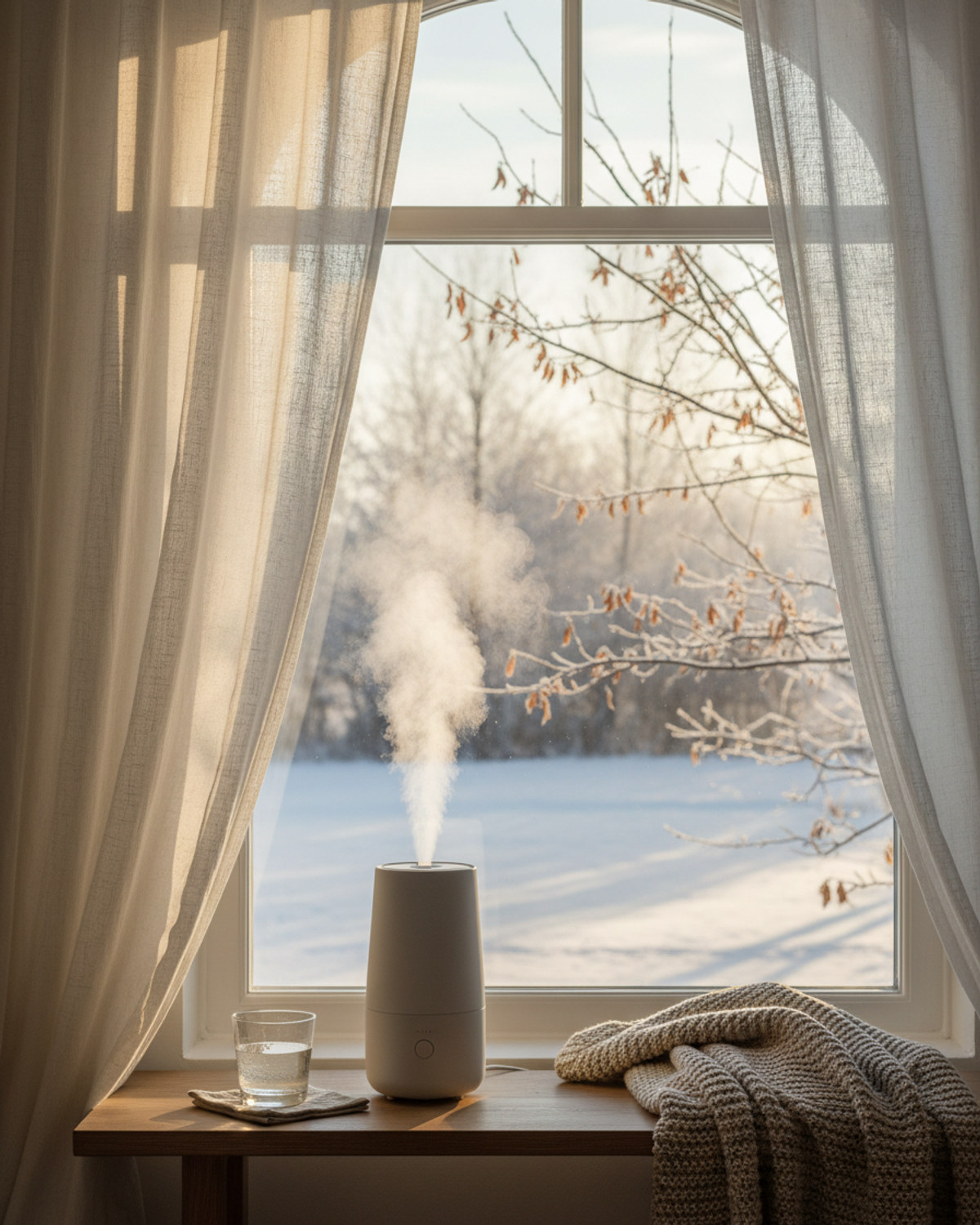
Furnaces are back on, and indoor air can get much drier than you expect. Here is what the research says about humidity, humidifiers and skin, plus the 40-50% target and cleaning rules that keep a humidifier from backfiring.
Flip the thermostat on in early November and the air in your home changes before your skin does. Heated indoor air in a cold climate is often far drier than the weather outside suggests, and skin that felt fine in October can start to look dull, tight and flaky within weeks. This guide covers what the research actually shows about indoor humidity and skin, what a humidifier can and cannot do, and how to use one without creating a new problem.
Why heated air can leave skin looking dry
Skin's outer layer, the stratum corneum, holds water that the surrounding air constantly tugs on. When indoor relative humidity (RH) drops, more water evaporates from the surface and the top layer holds less of it. Space heating is a common driver: one UK thesis on older adults in winter describes dry indoor air from space heating as an environmental issue affecting both comfort and skin condition.
The same project found that stratum corneum hydration tracked indoor humidity well. Researchers raised rooms to roughly 40%, 50% and 60% RH and saw hydration readings correlate significantly with absolute humidity across the age groups measured. Transepidermal water loss, a different measurement, did not reflect those changes in a real living environment.
Notice the limits. That work centered on older adults in winter, and some of the sites were care homes with small numbers of residents. It supports a link between room air and surface hydration, but it does not prove the same effect size for a 30-year-old in a city apartment.
What the broader evidence says about humidifiers
A Cochrane review looked at humidifying indoor air in workplaces and schools. For skin dryness, its pooled result came from two non-randomized cluster studies and showed a non-significant reduction. The reviewers rated the certainty as low and called for larger, better-measured randomized trials.
So the honest summary is this: a humidifier is a reasonable comfort tool, and the mechanism makes sense, but trial evidence that it changes how skin looks is thin. Treat it as one part of a routine, not a fix on its own.
The number to aim for
The US Environmental Protection Agency advises keeping indoor humidity below 60% RH, ideally between 30% and 50%, mainly to limit mold. That is a moisture-control guideline, not a skincare standard, but it gives you a useful window. The humidity research above used 40% to 60% rooms, so a target of about 40% to 50% sits inside both ranges.
A few practical points:
- Buy a small hygrometer, usually under $15, and read it in the room where you spend the most time. Built-in humidifier sensors can be off.
- If you wake with a dry mouth or tight face and the hygrometer reads under 30%, that is a sign the air is working against your routine.
- Bedrooms with closed windows and the heat on overnight tend to be the driest rooms.
Keep the humidifier from becoming the problem
The EPA is direct about this: stand-alone humidifiers should be cleaned very frequently so they do not become moldy, and filters can become moldy and spread spores around the area. Furnace humidifiers need regular cleaning too. Higher humidity is not better, because RH above 60% is likely to cause condensation, which can lead to mold growth.
A simple routine:
- Empty the tank and wipe it dry each morning.
- Refill with fresh water only at night, never top off old water.
- Descale and disinfect on a regular schedule following the manufacturer's directions, and rinse thoroughly afterward.
- Check windows and walls for condensation. If you see it, lower the setting.
The EPA also notes that humidification devices are among the sources that can affect indoor air quality, which is a reason to keep them clean rather than skip them.
Adjust your routine to match the room
Even with a humidifier, a few changes can help skin look more comfortable when the heat is on:
- Cleanse gently. Swap foaming or scrubbing cleansers for a mild, low-lather formula, and keep water lukewarm rather than hot.
- Moisturize on damp skin. Apply a humectant such as glycerin or hyaluronic acid, then seal it with a cream containing ceramides or petrolatum so the water you add has less chance to escape into dry air.
- Hold back on exfoliation. Acids and retinoids can leave skin more reactive when air is dry. Consider using them fewer nights per week until the season settles.
- Keep sunscreen in the morning. Lower winter UV does not mean zero UV, and reflective surfaces like snow add exposure.
What not to expect
A humidifier will not change your skin type, and the low-certainty evidence means results vary. If you are comfortable at 35% RH with a good moisturizer, you may not need one. If you live somewhere naturally humid, adding moisture can push you past the 60% line the EPA warns about.
Practical takeaway
This week, put a hygrometer in your bedroom and watch it for three days. If it sits below roughly 30%, add a humidifier and aim for 40% to 50%, never above 60%. Clean the unit daily, pair it with a gentle cleanser and a ceramide-rich moisturizer on damp skin, and pay attention to how your skin looks and feels after two weeks. If irritation persists, talk to a dermatology professional about your routine.