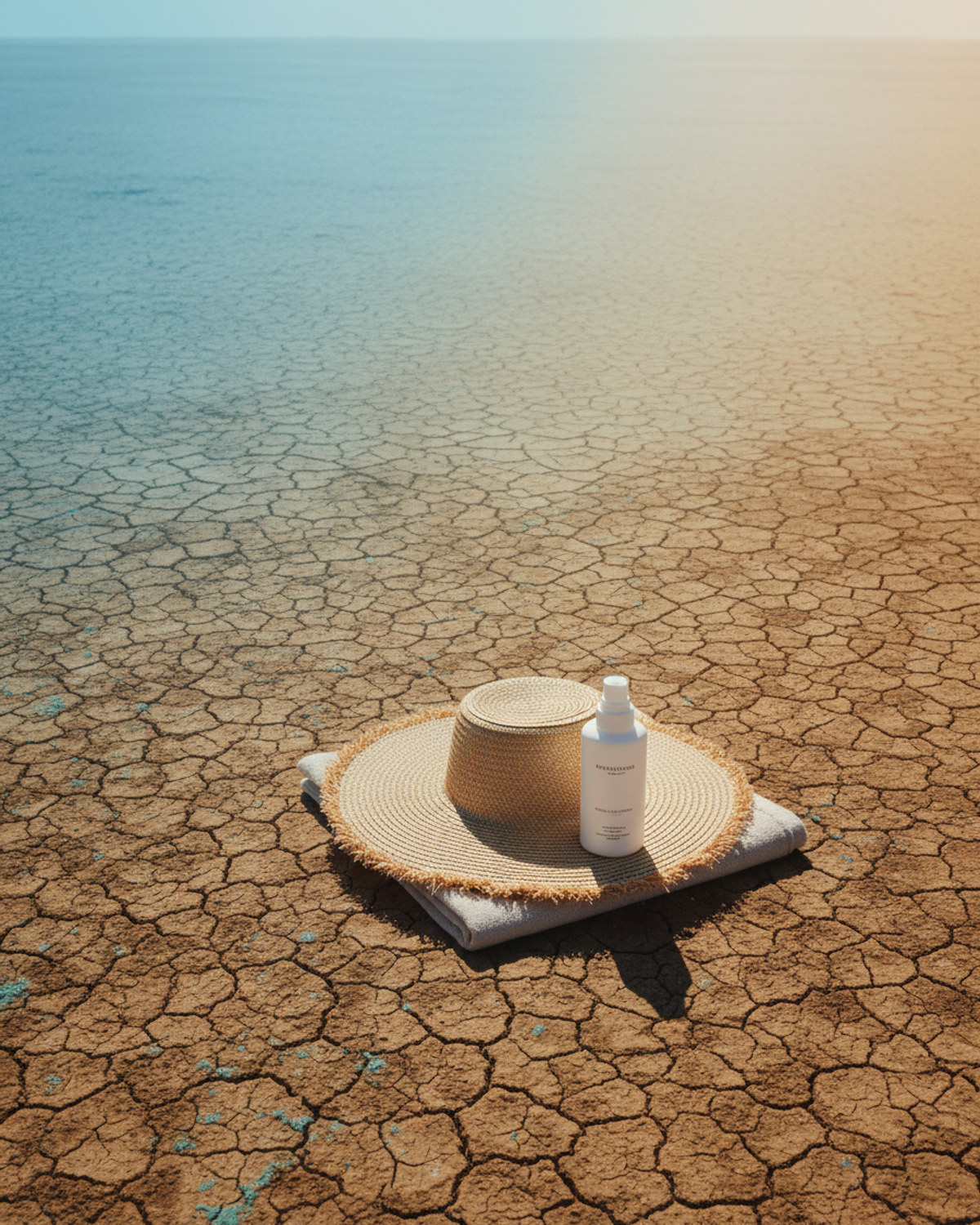
Phoenix's UV index is set to hit a very high 8.9 today, but new sweat-evaporation research suggests the dry heat that defines the city can erase the visible cue people rely on to know their sunscreen needs a reapplication.
Phoenix hit a very high UV reading again today, and anyone who has spent a September afternoon there knows the drill: reapply, seek shade, reapply again. But new research on how sweat behaves in hot, dry, windless air suggests the usual warning sign people rely on, a visibly damp face or shirt, may not show up at all in exactly the conditions where sunscreen needs the most help.
Today's Reading Looked Like July, Not Fall
Phoenix's UV index is forecast to peak at 8.9, a very high reading, between noon and 1 p.m. today, September 14, with levels climbing from near zero at sunrise to that midday spike before dropping back down in late afternoon. An 8.9 sits close to the top of the scale used across the US, and it means skin can show visible redness in a fraction of the time it would take on a mild spring day. The forecast recommends limiting outdoor time between 11 a.m. and 2 p.m. and treating SPF 15-plus as a floor, not a target. None of that is unusual for Phoenix in September. What is worth a second look is what happens to sweat, and sunscreen, once that sun is overhead and the air is bone-dry.
The Sweat You Cannot See
A team at Arizona State University recently documented a phenomenon they call dueling buoyancy: in hot, dry, and still air, warm air cooling against the skin sinks while moisture rising off sweat makes nearby air lighter and pushes upward, and around 105 degrees Fahrenheit with low humidity and no wind, those two currents can cancel each other out almost completely. The practical result is that airflow near the skin stalls, and sweat sits there evaporating far more slowly than people assume, sometimes reducing evaporation by more than half. Standard heat-balance models that ignore the effect underestimated core body temperature rise by close to 2 degrees Fahrenheit after two hours of exposure in still, dry heat. The researchers built a sweating manikin, nicknamed ANDI, with embedded sensors and ran roughly 100 simulations across different conditions to isolate the pattern.
Why a Cooling Study Matters for Skincare
This is a thermal-physics finding, not a skincare study, but it points at something skincare routines rarely account for. In humid climates, sweat pools on the skin because it cannot evaporate fast enough, so people get a clear physical cue that something is happening to whatever they applied that morning. In Phoenix's dry heat, the same sweat production can leave skin looking and feeling almost dry, because the moisture is leaving as vapor rather than sitting on the surface, right up until conditions like those in the ASU study slow that vapor loss down without making the skin look wet. Either way, sunscreen sitting on top of that skin is being disturbed by moisture and by the skin's own thermoregulation, just without the visual reminder a humid climate would provide.
What a Water-Resistance Label Actually Promises
Sunscreen labels only carry two water-resistance claims in the US: 40 minutes or 80 minutes. Those numbers come from a specific test, four 20-minute water immersions with a 15-minute air-dry after each one, not a sweat-simulation protocol, and the terms waterproof and sweatproof have been off US labels for over a decade because no formula holds up completely to either. That distinction matters in a place like Phoenix, where most sun exposure on a September afternoon is a walk to the car, a dog walk, or a workout, not a pool day. The 40 or 80-minute number on the bottle was never designed to describe what a formula does while someone sweats through a hike with no visible moisture on their face to remind them the clock is running.
A Reapplication Schedule Built for Dry Heat, Not Humid Assumptions
The American Academy of Dermatology's baseline guidance is about one ounce of sunscreen for full body coverage, at least a teaspoon for the face, reapplied every two hours outdoors and immediately after swimming or heavy sweating. Cleveland Clinic adds a sharper detail for exercise specifically: sweating while working out or doing yard work can dilute sunscreen enough to shorten that window to about an hour, and water-resistant formulas should not be expected to stretch a full two hours during any water or heavy-sweat activity. Put together with the ASU findings, the practical read for a desert climate is that the two-hour or one-hour clock should run regardless of how dry or damp skin looks, since dry-looking skin in 105-degree, low-humidity air is not reliable evidence that sweat, and the sunscreen sitting in it, are staying put.
What This Looks Like at Noon in Phoenix
Picture a midday errand run or an early-evening jog started too early, both landing inside today's 8.9 peak window. Skin may look and feel dry the entire time, no visible sheen, no damp collar, yet the person is still losing moisture through vapor and potentially still working the sunscreen film loose at the molecular level the water-resistance test was measuring in a pool, not on a sidewalk. The fix is not a different product so much as a different trigger for reapplication: a phone timer instead of a mirror check. Checking a watch at the one-hour mark during an outdoor workout, or the two-hour mark during lower-effort time outside, sidesteps the entire question of whether skin looks sweaty, because in dry heat it usually will not.
The Takeaway
On a day like today, with Phoenix's UV index forecast to reach 8.9 at midday, the visible cues people normally trust to judge sunscreen wear, a shiny or damp face, are exactly the cues that dry desert heat suppresses. Set a reapplication timer before heading out rather than waiting to feel like reapplication is due: roughly every hour during a sweaty outdoor activity, every two hours otherwise, and immediately after any water exposure, regardless of what the skin looks like in between.