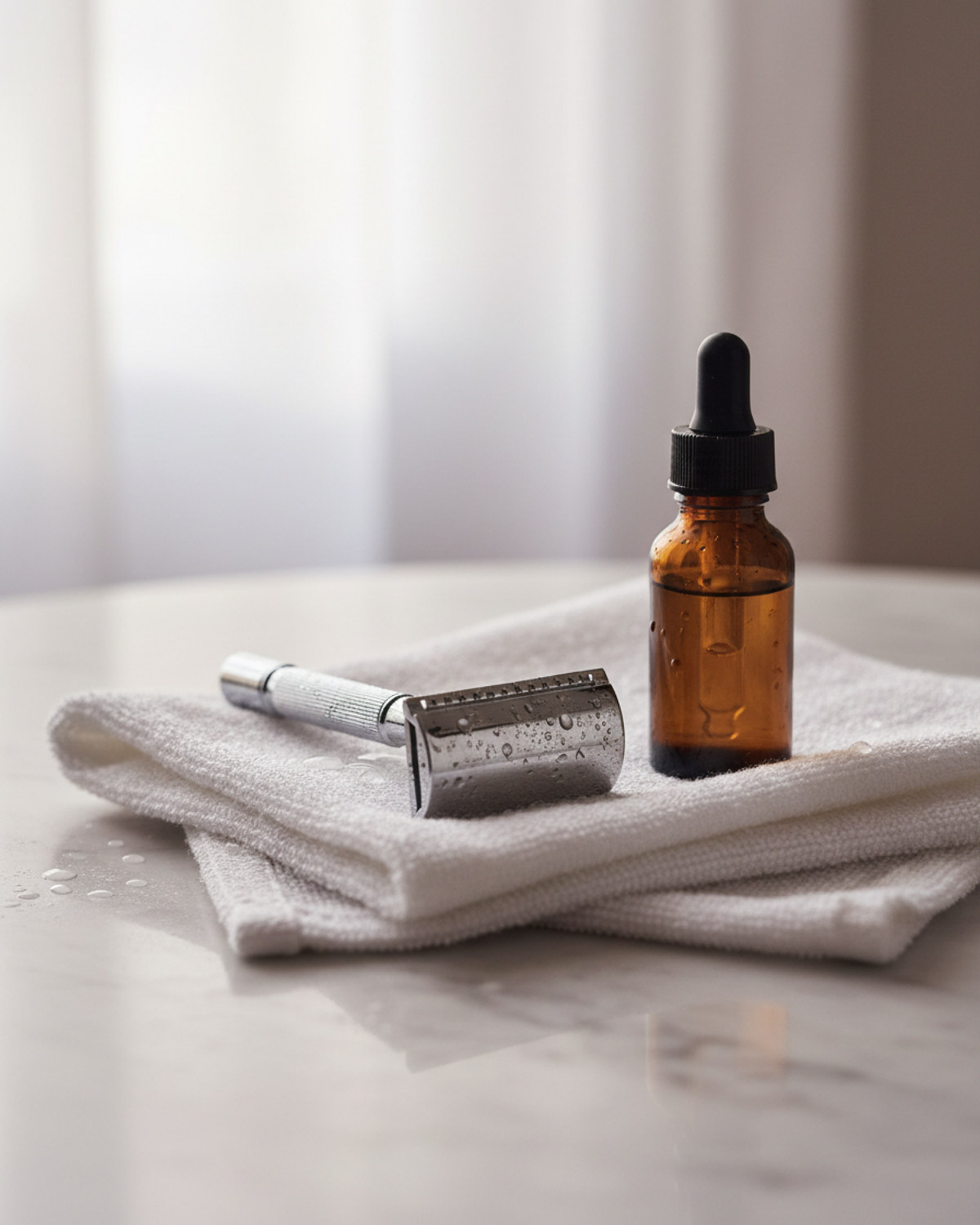
Post-shave bumps get blamed on the razor or the cream, but the pattern traces to something more specific: the angle a hair gets cut at and whether it has a straight path back out of the skin.
Ask around and youll hear the same story: a fresh shave looks fine for an hour, then a cluster of small, itchy bumps shows up along the jawline or neck by evening. The instinct is to blame the blade or the shaving cream. Usually thats not where the problem starts.
The Cut Angle Matters More Than the Blade
A razor doesnt just shorten hair, it cuts it at a slant. On straight hair thats harmless. On hair with any curl or coil, that slanted tip is now a sharp point aimed back at the skin, and as the hair keeps growing it can curve directly into the follicle wall instead of out through the surface [1][3]. Swapping razors or switching to a fancier shave gel doesnt change that geometry, which is why so many people cycle through products without the bumps ever really going away.
What's Actually Happening Under the Skin
Once a curved hair tip reenters the skin, the body treats it the way it treats any foreign object under the surface: it mounts a small inflammatory response. That shows up as a firm, sometimes tender bump, occasionally with a small pustule at the center [3][4]. Left alone, a lot of these clear on their own as the hair eventually works its way back out. Picked at or repeatedly shaved over, the same spot can scar or leave a raised mark that lingers well after the irritation has settled [2].
Who Sees This Most, and Why
This isnt random bad luck. Hair curl pattern is the single biggest predictor. In published estimates, somewhere between 45 and 85 percent of Black men who shave experience this pattern of bumps at some point, and Hispanic men and anyone with tightly curled hair face meaningfully higher odds than people with straight hair [3]. Genetics around follicle shape play a role too, which is part of why two people using an identical routine can have completely different results.
The Shave Habits That Actually Move the Needle
The fixes that dermatologists point to arent exotic. Shave with the grain of hair growth rather than against it, since going against the grain cuts the hair shorter and sharper, right where it does the most damage [1][2]. Soften the area first: a warm shower or five minutes with a damp warm washcloth swells the hair shaft slightly and makes it less likely to curl back on itself [1][3]. Use a noncomedogenic cleanser before shaving and let a moisturizing shave cream sit for a minute or two so the blade is gliding rather than dragging. Swap disposable blades every five to seven uses, since a dull edge tugs at hair instead of slicing it cleanly, which increases exactly the kind of angled cut that causes trouble [1][2]. For anyone with curl-prone hair, leaving a small amount of length rather than shaving flush to the skin, or shaving every two to three days instead of daily, gives hair less runway to curve back in before its cut again [1][3].
Dermaplaning Bumps Are a Different Mechanism
The face-shaving trend thats been all over social feeds works on a different principle, and its worth not lumping it in with beard-area bumps. Dermaplaning uses a single blade to skim off the very fine vellus hair and the top layer of dead skin cells, and because that hair is soft and doesnt have the same curl-and-reenter pattern, it doesnt typically create ingrown-hair bumps the way beard shaving does [6]. When bumps or redness do show up after dermaplaning, its more often mechanical irritation or a small nick than a trapped hair, which is why the fix looks different: keep it to about once a week so skin has time to recover, disinfect the blade with rubbing alcohol before and after, and skip it entirely during a stretch of active breakouts, since the blade can spread bacteria across compromised skin [6][5]. A professional session runs roughly $75 to $200 and is worth it at least once to learn the correct 45-degree angle and pressure before trying it solo [5].
What Actually Helps in the Minutes After
Skip the urge to rinse with hot water right after either kind of shave, it just prolongs the redness. A cool compress calms the skin faster than warm water does, and a fragrance-free moisturizer applied while skin is still slightly damp helps rebuild the surface [1][3]. Gentle exfoliation two to three times a week, using a soft brush or a mild chemical exfoliant, can help clear the dead skin cells that trap regrowing hair, but only when the area isnt already inflamed. Exfoliating over active bumps just adds mechanical irritation on top of what's already there [3].
When to Change the Whole Approach
If the same few spots keep flaring no matter how careful the technique, it may be worth stepping back from shaving that area altogether for a stretch. Hair thats simply allowed to grow out removes the underlying cause, and bumps in that pattern tend to settle within roughly three months once shaving stops [4]. Electric razors and single-blade razors that dont cut as close to the skin carry a meaningfully lower risk than multi-blade cartridges for people who deal with this repeatedly [1][3]. For a longer-term fix, laser hair removal reduces the amount of new hair growth altogether, which removes the mechanism rather than managing around it, though it takes multiple sessions and isnt instant [3].
The Takeaway
Bumps after shaving are almost never about which razor or cream is in the bathroom. Theyre about the angle a hair gets cut at and whether it has a straight path back out of the skin. Shave with the grain, keep blades fresh, soften the area first, and give curl-prone skin either more length or more days between shaves. If bumps persist in the same spots for months despite good technique, thats a signal to change the method entirely, not just the product on the shelf.
Guidance that learns with you
Rituelle reads your skin over time and adapts your routine to it.
Get the app