

Sun & UV
High UV in Miami in November: Why the Forecast Number Beats the Thermometer
Miami is reading a high UV index in early November. Here is what the EPA, WHO, CDC and FDA say to do about it, and how to build a simple layered routine.
6 min read
The two-hour rule is clear, but doing it over foundation is not. Here is what FDA, AAD and a dermatologist say about powders, sprays and the amount problem.
· 5 min read
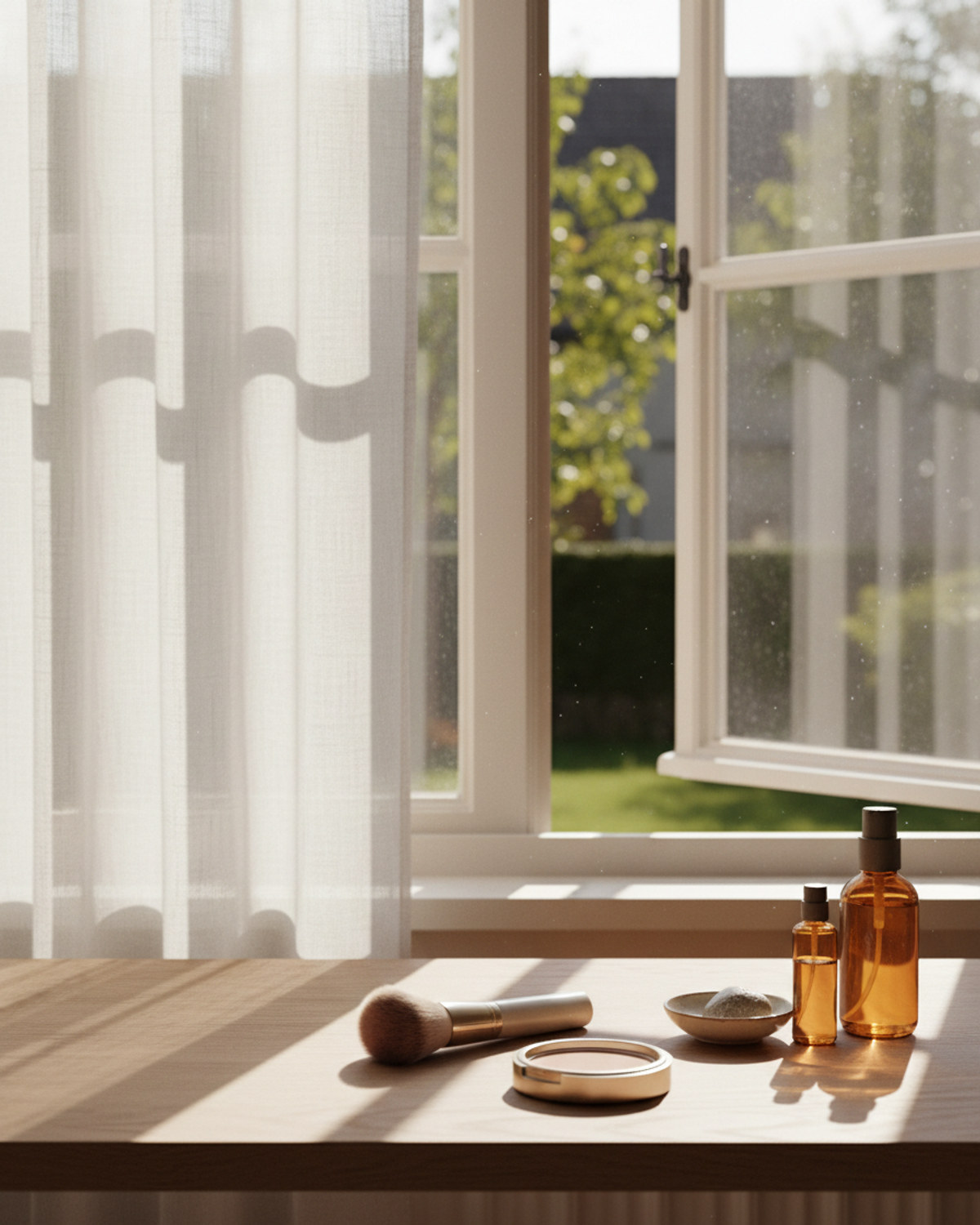
You put on sunscreen at 8 a.m., added foundation, and now it is lunchtime with a full afternoon of daylight ahead. Reapplying feels impossible without wrecking your makeup, so most people simply skip it. This guide covers what the main US sources say about reapplying over makeup, which formats are realistic, and where the honest limits are.
The FDA advises reapplying sunscreen at least every two hours, and more often if you are swimming or sweating. The American Academy of Dermatology gives the same interval for time outdoors, and notes that SPF in a moisturizer or cosmetic does not remove the need to reapply. The Skin Cancer Foundation repeats the two-hour rule and adds that you should reapply right after swimming or sweating.
Two details matter for makeup wearers. First, if you are mostly indoors with only short exposure, the Skin Cancer Foundation says a sunscreen or cosmetic product with SPF 30 or higher can be enough. Second, none of these pages claim that a thin layer of tinted base replaces a proper sunscreen layer during a long day outside. Whether you need a midday top-up depends on how much time you actually spend in direct daylight.
The FDA says an average adult needs at least one ounce, about a shot glass, to cover the whole body. The Skin Cancer Foundation notes that most people apply less than half of that, which lowers the protection they actually get. Foundation with SPF is the same story: the number on the bottle assumes a generous layer, and a sheer wash of base is far from it.
This is why a quick midday dab is best seen as a top-up on top of a decent morning layer, not a fresh start. It adds some coverage where your morning layer has worn, shifted or been wiped away, but it will not rebuild a fully labeled SPF on its own.
The most common recommendation is a brush-on SPF powder. Dermatologist Blair Murphy-Rose, quoted in a Real Simple piece, calls powder an excellent choice for convenient reapplication over makeup. The same article lists caveats worth knowing:
In theory, a powder performs like any other sunscreen at the same SPF if applied correctly. In practice, correct application is the hard part. A practical approach: tap off the excess, then build two or three passes across the forehead, nose, cheeks and chin instead of one light dusting.
Spray formats look convenient, but the FDA says spray sunscreens should never be applied directly to the face, and some contain flammable ingredients, so avoid smoking and open flames while using them. If you use a spray, the safer route for the face is to spray into your hands first and press it on, following the product label. That does disturb makeup more than powder does, so many people reserve sprays for the neck, ears and hands, which often get missed.
Another route is a cream or stick designed to be pressed rather than rubbed. The reasoning is simple: rubbing drags pigment around, while patting with a clean sponge or fingertips lays product over the top. Expect some loss of finish, especially with heavier foundation. If you wear full coverage, a lighter base in the first place makes the whole routine easier.
Honest limits are worth stating. The sources here are consumer guidance from regulators, professional bodies and one dermatologist interview, not head-to-head trials of powders over foundation. We found no reliable study-backed figure for how much powder equals a full layer of cream sunscreen, so treat any exact claim about that with caution. Products also differ in how they were tested, so read the label of whatever you buy, especially the SPF number and water resistance statement.
Start with a generous layer under makeup, then reapply about every two hours when you are outdoors in strong daylight. Brush-on mineral powder in several passes is the least disruptive way to do it over makeup, sprays should stay off the face, and a midday top-up supports your morning layer instead of replacing it. For a short walk at lunch, you may not need a top-up at all; for a day outside, plan one.
Rituelle reads your skin over time and adapts your routine to it.
Join the waitlistSun & UV
Miami is reading a high UV index in early November. Here is what the EPA, WHO, CDC and FDA say to do about it, and how to build a simple layered routine.
6 min read

Decoding Labels
Tone-up creams are still around, but a pink brightening base is not automatically sun protection. Three label checks, grounded in FDA guidance, separate real sunscreen from makeup.
5 min read
Sensitivity & Redness
A new product every day makes it hard to know what your skin is reacting to. Here is a staggered patch-test and logging plan built on published guidance.
5 min read