The dots lining the nose that pore strips promise to erase are open, functioning oil channels rather than blockages, and dermatology sources agree the follicle refills within about 30 days of being extracted.
Scroll through any skincare forum and someone is asking the same question: how do you get rid of the tiny gray or yellowish dots lining the nose. The advice that comes back is remarkably consistent — pore strips, a fresh extraction, a charcoal mask before a big day out. Almost none of it holds for more than a few hours, and dermatology sources are direct about why: those dots are not something to remove. They are open, functioning duct openings, and the skin rebuilds them on a schedule no topical routine can outrun [1].
What's Actually Sitting in Those Dots
A sebaceous filament is the lining of a hair follicle's oil channel, filled with a mix of sebum and shed skin cells, sitting flush with the pore opening [2]. Cleveland Clinic describes it as a normal, healthy structure that carries oil to the surface so skin doesn't dry out [1]. Every pore that produces oil has one. They are not a flaw in the skin, they're the plumbing that keeps it functioning.
Why the Nose Notices It Most
Sebaceous filaments exist everywhere oil glands cluster, but the nose and the center of the cheeks carry the densest concentration of them, sitting over some of the thinnest skin on the face [2]. Schweiger Dermatology Group notes that once oil output rises, the surrounding pore stretches to accommodate it, and the filament inside becomes easier to see and more likely to trap fine dust, which is what reads as a dark speck under bathroom lighting [2]. That's also why the same face can look clear at night and dotted by late afternoon: oil output, not the filament itself, is what changes hour to hour.
Not the Same Structure as a Blockage
The distinction that gets lost in most advice threads is that a plugged, raised bump is a different structure entirely, formed when a pore closes over trapped material rather than staying open [4]. A sebaceous filament stays open at the surface. Squeeze one and, at most, a thin waxy thread comes out; squeeze a true blockage and a firm plug comes out [1]. Treating both the same way, with the same aggressive extraction technique, is why people get frustrated when flat gray dots that were never blocked don't clear at the rate a raised bump does. They were never the same problem.
When It's Actually Something Else
If the skin around the nose is raised, tender, or inflamed rather than flat and dotted, that's a different pattern that a sebaceous filament routine won't address, and it's worth asking a dermatologist to look at directly rather than guessing from a mirror. The routine below is specifically for the flat, evenly spaced dots most people are describing when they complain about their nose in photos — not for raised or tender bumps.
Why Pore Strips Make It Look Worse, Not Better
Pore strips physically pull a filament's contents out of a channel that was never sealed. Cleveland Clinic flags this directly: pore strips remove the filament along with surface oil, drying the skin around it, and repeated use is more likely to trigger irritation than to produce any lasting improvement [1]. Because the structure is a duct rather than a plug, there is nothing being cleared out in the way a strip implies — the satisfaction is visual, and the pore returns to the same state within a day or two.
What Actually Softens Their Appearance
Nothing removes a sebaceous filament permanently, since the anatomy doesn't allow that, but a few approaches can make one look smaller and shallower over time:
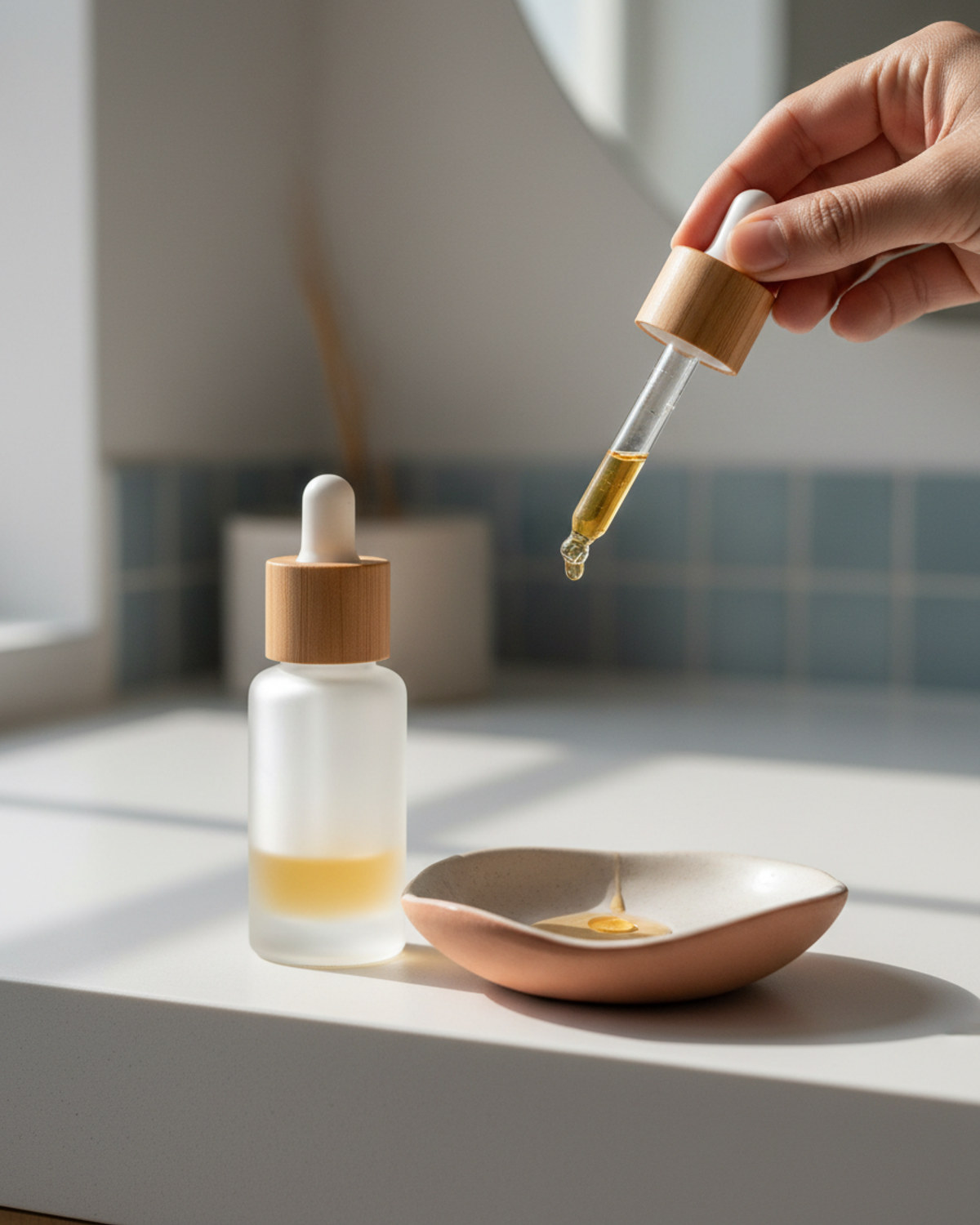
- Salicylic acid (BHA) is oil-soluble, so it moves inside the follicle rather than sitting on the surface, loosening the material inside a filament so it sits flatter against the skin [3]. Most leave-on treatments and cleansers use it at low, well-tolerated concentrations rather than anything aggressive.
- Retinoids: Cleveland Clinic lists prescription options alongside gentler over-the-counter retinol as helpful because they speed the turnover of dead skin cells that build up around the follicle opening [1].
- Clay masks temporarily absorb surface oil, which reduces how much a filament catches the light, though the effect fades within a day [3].
- Plain exfoliation, whether a mild physical scrub used sparingly or a chemical exfoliant, clears dead skin around the opening without disturbing the duct itself [1].
Paula's Choice recommends pairing a pore-normalizing cleanser with a few nights a week of a leave-on BHA as a baseline, along with a barrier-supporting moisturizer so the routine doesn't tip into dryness and irritation [3]. That combination — cleanse, BHA a few nights weekly, moisturize — is a reasonable starting routine for most skin types before adding anything stronger.
Extractions and the 30-Day Reset
If a filament is manually extracted at home or during a facial, expect it back. Multiple dermatology sources converge on the same window: the follicle refills within about 30 days [1][3]. That isn't a treatment failing, it's the gland doing its normal job again. A 1979 anatomical description published in the Western Journal of Medicine characterized the material inside as a loose, porous mass sitting in the follicle — a structure that regenerates because it's tied to an active, ongoing gland rather than a one-time clog [4]. Judging any product against permanent removal sets it up to fail against biology, not formulation.
The Realistic Routine
The practical version of all this: stop chasing full removal, since the structure being targeted was never a defect to eliminate. Build a routine around a gentle, pore-normalizing cleanser, a leave-on salicylic acid a few nights a week, and a retinoid if skin tolerates one, then judge progress by whether the nose looks smoother and less shiny within a week or two — not by whether every dot disappears. Skip the pore strips and the aggressive squeezing entirely. Both work against a structure that is built to reopen, which means the next photo will show the same dots no matter how satisfying the strip felt to peel off.