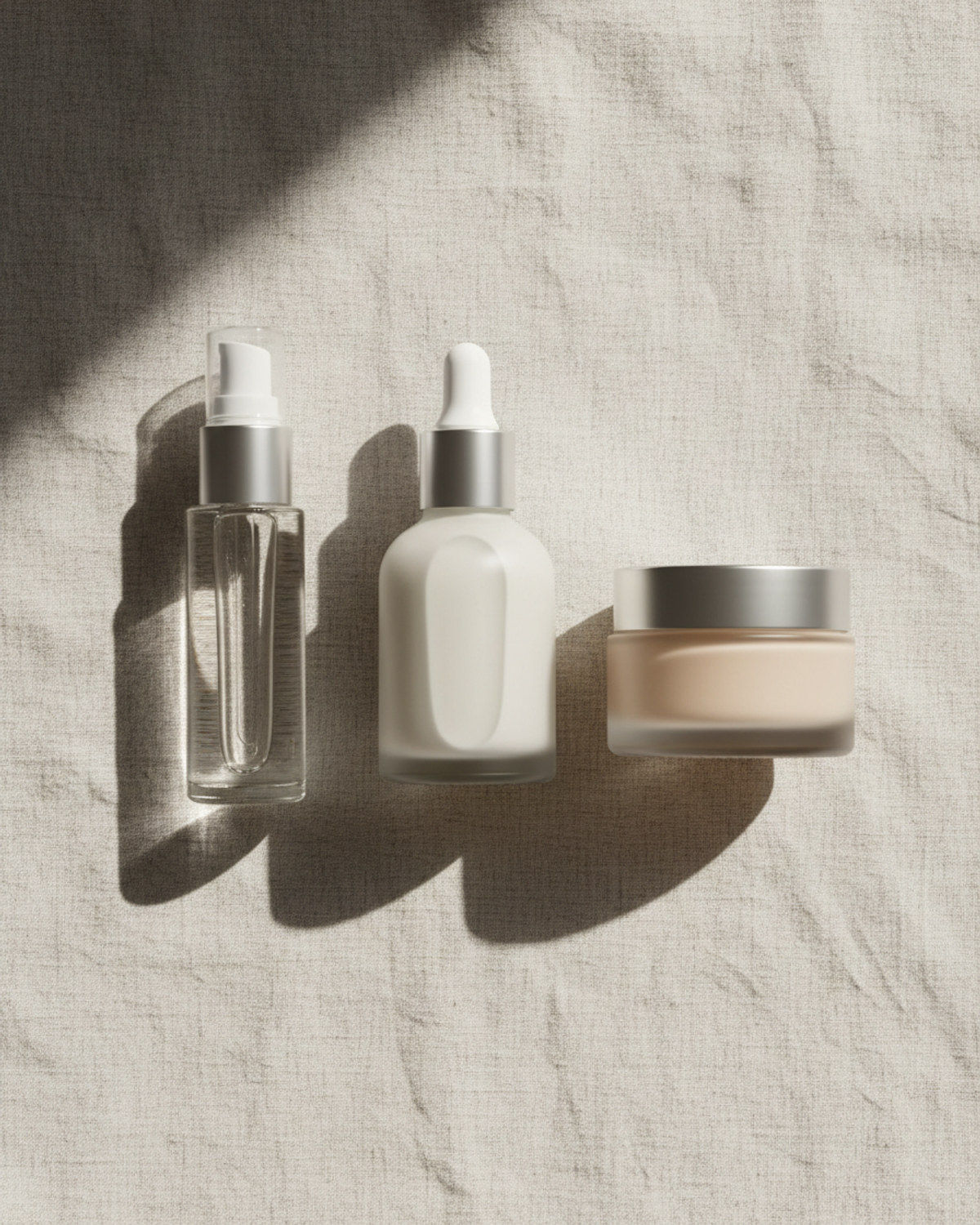
Thinnest to thickest is the default advice for layering products. A January 2026 review of sequential application shows where the rule has support and where the evidence runs out.
Every skincare routine guide repeats the same rule: apply products from thinnest to thickest, with sunscreen last in the morning. It sounds tidy, but how much of it is evidence and how much is folklore? A January 2026 review in a pharmacology journal gives a more useful answer than most brand blogs, and it changes how I would build a routine.
What the thinnest-to-thickest rule actually says
Cleveland Clinic's September 2025 guide, quoting dermatologist Sean McGregor, DO, lays out the standard version. In the morning: cleanser, an optional serum, moisturizer, then sunscreen. In the evening: cleanser, a retinol or retinoid, then moisturizer. The stated reason is that a thick cream applied before a thin serum can block the serum. A consumer health feature quoting an aesthetician makes the same point more bluntly, warning that serum over moisturizer may keep actives from reaching their target.
These are reasonable, widely repeated expert recommendations. But they are advice, and the quotes are from practitioners rather than head-to-head trials. That is the gap worth looking at.
What the research shows about sequence
Burstein and Maibach reviewed twelve studies on sequential topical application and concluded that sequence was not pharmacologically neutral. Their findings, which mostly involve drug products rather than cosmetics, point to a few mechanisms:
- Hydration and occlusion can increase delivery. Occlusion applied after a product roughly doubled levels of one tested compound in the outer skin layer. A brief moisturizer pre-application increased permeation of another tested compound, but the effect faded by 30 minutes.
- Keratolytic pretreatment can open the door. Salicylic acid applied first increased penetration of a second compound in an ex vivo experiment.
- Heavy vehicles can get in the way. A petrolatum-rich emollient reduced delivery of a tested compound even at a 30-minute interval, and one compound's concentrations fell two- to threefold when applied immediately after a cream.
So the core idea behind the rule holds up as a mechanism: a rich, occlusive layer can change what gets through. The review also found cases where order mattered less. In a pediatric randomized trial, clinical scores did not differ whether a prescription product went on before or after an emollient, and for one gel tested with several moisturizers, sequence did not significantly change absorption.
What this does not prove
Be careful about stretching these results. The studies involved specific drug compounds, ex vivo skin and clinical products, not the niacinamide serum and ceramide cream on your shelf. The review is not a test of cosmetic routines, and I found no peer-reviewed trial that directly compares serum-then-moisturizer with moisturizer-then-serum for common cosmetic ingredients. Figures you may see online, such as claims that wrong layering cuts absorption by up to 40%, trace back to brand blogs and I could not verify them.
The honest summary: the physics behind thinnest to thickest is plausible and partly supported, the size of the effect for cosmetics is unknown, and an aesthetician quoted in one feature put it modestly, saying the wrong order will not invalidate your products but may diminish their full potential.
A simple order that respects the evidence
Use the rule as a default and let a few specifics break ties:
- Cleanse once. McGregor advises a gentle wash with your hands and no double cleansing.
- Water-based and lightweight first. Thin serums and essences go on cleansed skin before creams.
- Retinoids count as serums. Apply at night before moisturizer, in a pea-sized amount.
- Moisturizer seals the layers beneath. Per the occlusion findings, this step is where the most change in delivery plausibly occurs.
- Face oil, if you use one, goes close to last at night. McGregor suggests oils only for dry skin because they can be very occlusive; if you use one, he places it right before moisturizer, while other guides put it after. Sources disagree here, so choose by how your skin feels.
- Sunscreen is the final morning step. Use a broad-spectrum product, SPF 15 or higher, as the last layer, and remember that makeup or moisturizer with SPF is usually not enough on its own.
Timing and simplicity matter more than perfection
One finding in the review is easy to miss: fixed-combination formulations generally gave more consistent and predictable delivery than free sequential regimens, and the authors advise specifying order and timing whenever stepwise application is necessary. For your routine, this suggests two habits. First, keep the number of layers small, because each added product adds variability. McGregor also notes that using too many products raises the chance of irritation. Second, be consistent: the same order, in the same amounts, each day, so you can tell what your skin is responding to.
The 30-minute fade seen in one moisturizer pre-application result suggests short waits are not magic, so there is no need to stand at the sink timing each layer. A minute or so for a serum to settle before the cream is plenty for comfort and to avoid pilling.
Practical takeaway
Treat thinnest to thickest as a sensible default, not a law. Put lighter, water-based layers first, retinoids before moisturizer at night, an occlusive or rich cream after them, and sunscreen last in the morning. Keep your routine to a few steps, keep the order the same daily, and if a heavy cream seems to leave your serum pilling or ineffective-feeling, swap the order for a week and see how your skin looks and feels. If you use prescription products, ask your doctor or pharmacist about order and timing rather than relying on this guide.