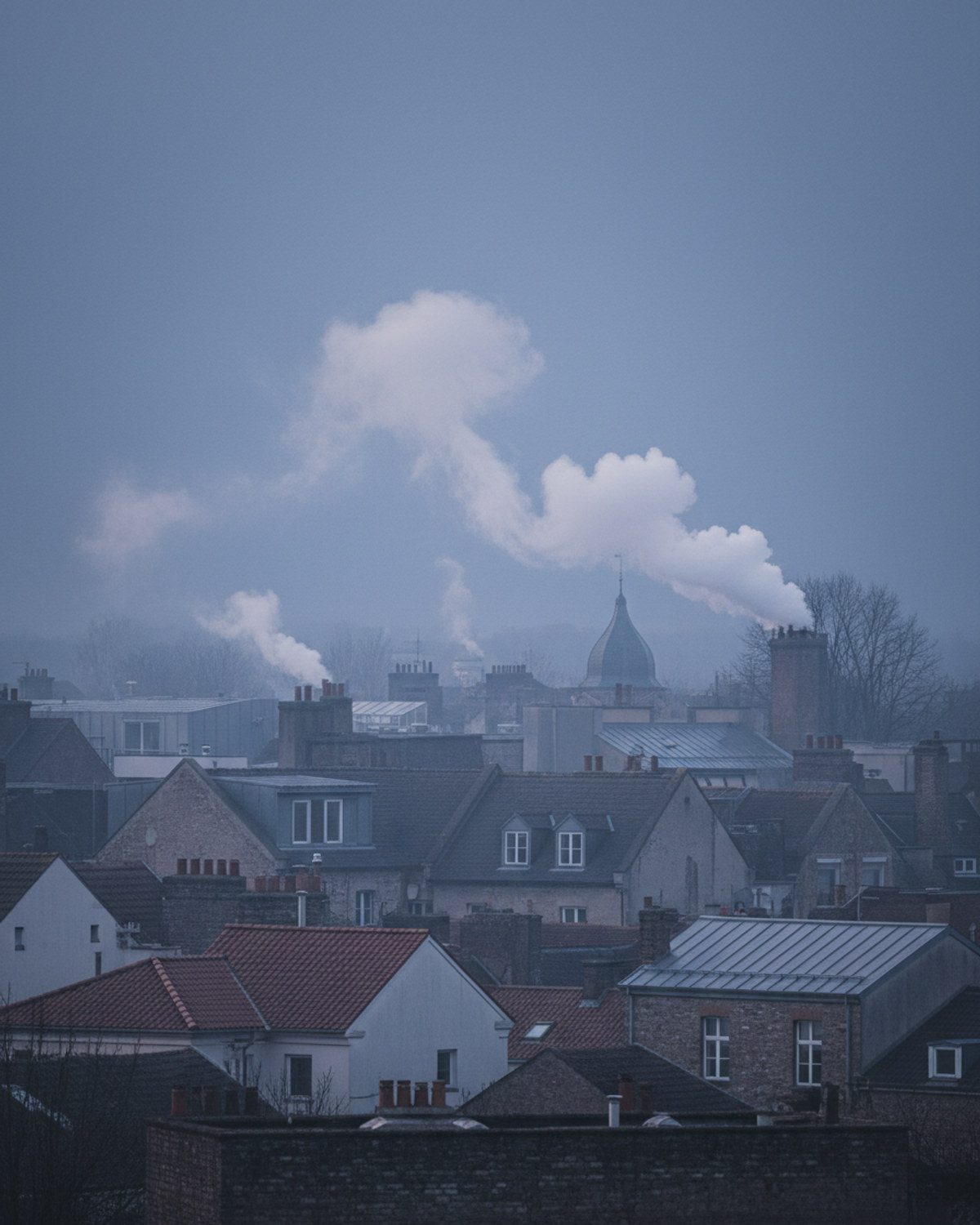
A January 2026 study put home wood burning at about 22% of winter outdoor PM2.5 in the US. Here is what lab research suggests for skin and a simple, low-effort evening routine.
Early November is when many US cities begin to see the first stretch of smoky, stagnant evenings. This week New York is among the metros showing poor air quality readings, and chimneys and wood stoves are part of the story nationwide. If you have wondered whether that haze matters for how your skin looks and feels, the honest answer is nuanced: the particle science is real, the skin evidence is mostly lab-based, and a gentle routine does more than a dramatic one.
Why winter smoke is a bigger deal than the numbers suggest
A study published in Science Advances in January 2026 estimated that home wood burning accounts for about 22% of outdoor fine particle pollution (PM2.5) across the US in winter, even though only about 2% of households use wood as their main heat source. The analysis worked neighborhood by neighborhood using EPA data and computer models. Much of the impact lands in cities, because smoke from suburban homes drifts inward. One caveat matters for your own expectations: the study looked at outdoor air only and did not measure indoor smoke exposure.
The American Lung Association adds that wood smoke carries fine particles plus carbon monoxide, volatile organic compounds and formaldehyde, and that it affects everyone, not just people with existing conditions. That framing is about breathing, not skin. It is why the first practical step on a smoky day is to look after your air, not your face.
What the skin research actually shows
A 2020 systematic review in Particle and Fibre Toxicology screened 540 articles and included 75 on airborne particulate matter and skin. Its main findings:
- Particles can disrupt the skin barrier in lab models, with reduced expression of structural proteins such as filaggrin, keratins and loricrin, and stronger effects on skin whose barrier is already compromised.
- Particles generate oxidative stress, both directly through reactive surfaces and adsorbed compounds, and indirectly through cellular pathways, which in turn activates inflammatory signaling.
- Population observations link long-term urban particle exposure with signs of accelerated extrinsic aging, such as pigment spots and coarse wrinkles.
The same review is candid about limits. Experimental studies used different particle sources, doses and exposure times, which makes comparison difficult. Lab cultures lack a full stratum corneum, rodent skin differs from human skin, and the way particles penetrate healthy skin still needs investigation. In short, there is a plausible mechanism and a concerning long-term association, not proof that one smoky evening changes your skin.
What one poor air day does and does not mean
Nothing in these sources shows that a single day of elevated PM2.5 causes visible change. The concerning data concerns sustained exposure over years. A single smoky evening is a reason to be gentle and tidy, not to overhaul your routine or buy a new product line.
A gentle evening routine for smoky days
- Wash your face once in the evening with a mild, low-foaming cleanser and lukewarm water. Hot water and scrubbing add to barrier stress, which is the very thing the lab research highlights.
- Skip aggressive exfoliation that night. If your barrier is already tight or stinging, let it rest.
- Rinse hair and change pillowcases more often if you were outdoors in visible smoke, since particles settle on hair and fabric.
- Follow with a simple moisturizer. Look for ceramides, glycerin or petrolatum-based formulas that support the look of a comfortable barrier.
- Use an antioxidant in the morning if you already enjoy one, such as vitamin C or E, under sunscreen. The evidence for antioxidants against pollution comes mostly from preclinical work, so keep expectations modest.
Protect the air, then the skin
The Lung Association's advice for wood burners is practical: burn only wood dried for at least six months, keep fires small and hot, never burn garbage, vent heating devices directly outside, and avoid burning on poor air quality days if you have other heat. If someone in the home has asthma or another lung or heart condition, a HEPA filter in the living room and bedroom is recommended. Closing windows during smoky evenings and running a filter in the bedroom are low-effort steps that protect your lungs first and incidentally reduce what settles on your skin overnight.
Reading claims about pollution-protection skincare
Many products promise an anti-pollution shield. The review does not test cleansers or creams against particle exposure, so any such claim should name its study, its participants and its comparison. A product that states a measured result you can look up is more credible than one that relies on a vague phrase like defends against urban stress.
The takeaway
Wood smoke is a bigger source of winter particle pollution than its small household footprint suggests, and the lab science points to barrier disruption and oxidative stress as plausible ways particles interact with skin. For you, that means three habits: protect your indoor air with a filter and closed windows on smoky nights, cleanse gently once in the evening, and keep a plain moisturizer and daily sunscreen in the routine. If your skin feels persistently irritated, talk to a dermatologist rather than adding more products.
Guidance that learns with you
Rituelle reads your skin over time and adapts your routine to it.
Join the waitlist