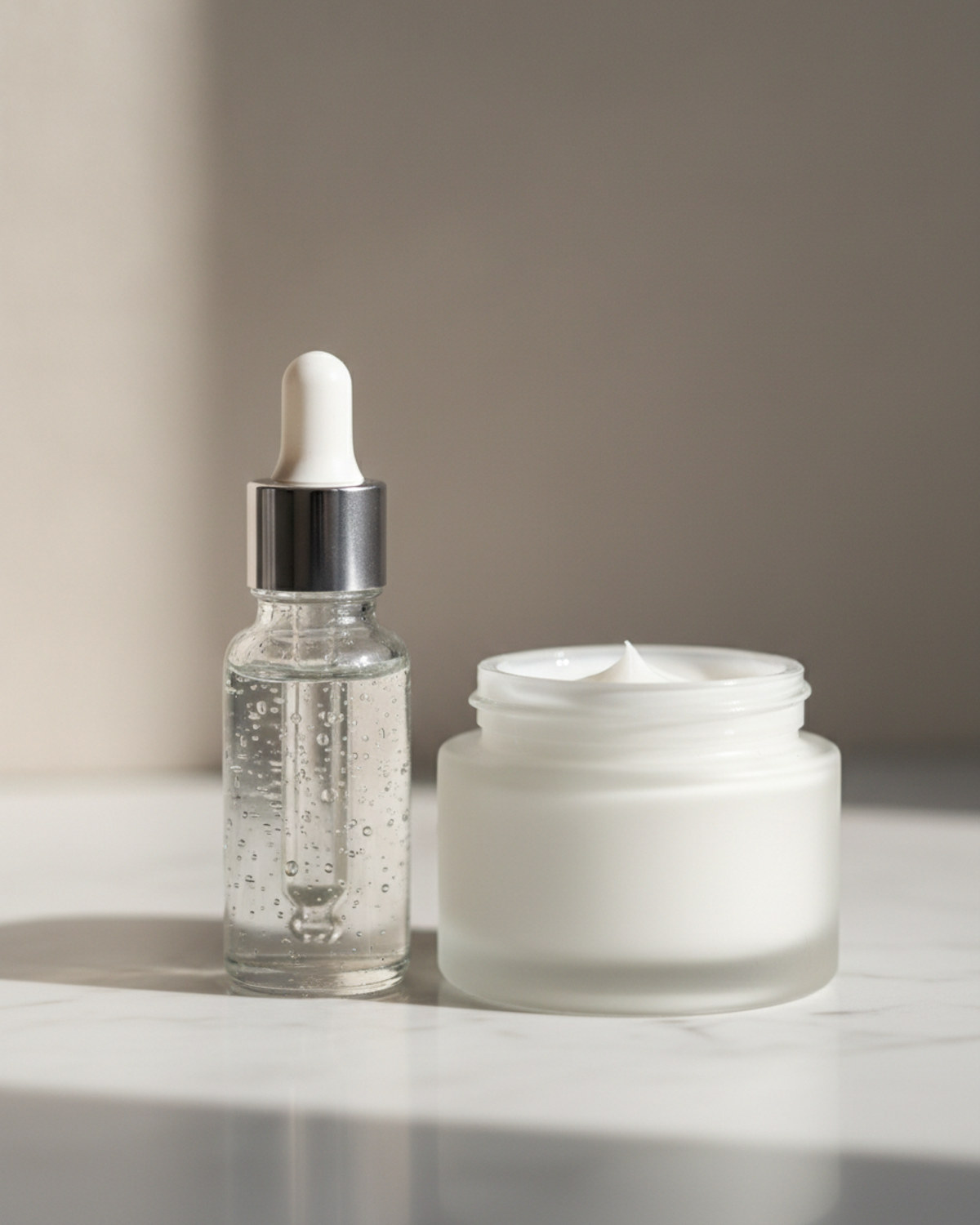
The white crumbs under sunscreen are not niacinamide and zinc fighting each other. They are two film layers meeting before either has finished setting, and the fix is timing, not a new serum.
The Complaint Behind the Search
Search interest in 'niacinamide the ordinary' spikes every few months, and a large share of it traces back to one specific complaint: white flecks or crumbs forming on the face minutes after applying Niacinamide 10% + Zinc 1% and following it with a moisturizer or sunscreen. The serum is one of the best-selling formulas in the brand's lineup, and the pilling complaint has followed it since launch. The instinct is to assume the 10% niacinamide and the 1% zinc are somehow fighting each other on the skin. The formulation chemistry says otherwise, and the real explanation is duller and more useful: it is almost entirely about timing and touch, not the actives themselves.
Two Films Meeting, Not Two Ingredients Reacting
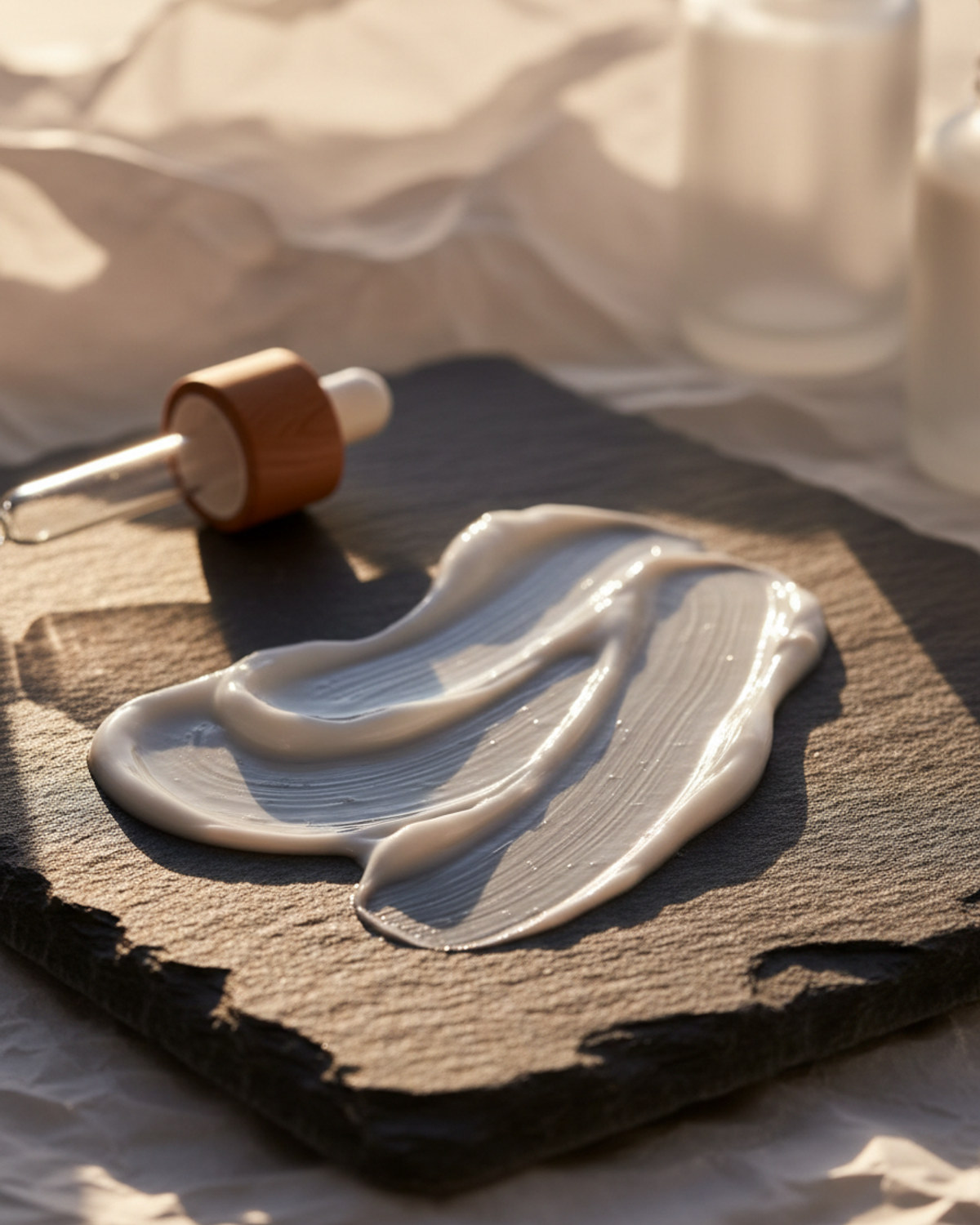
Pilling is a mechanical event, not a chemical reaction. It happens when a still-wet layer of one product meets a partially set layer of another, and the two grab onto each other under friction instead of blending in. Formulators describe the mechanism as film-forming layers rolling together rather than absorbing: a water-based serum that has not fully dried, topped by a heavier cream or sunscreen, gets worked by fingers rubbing it in, and the surface layers ball up into visible debris [4]. That mechanism has nothing to do with what the serum contains. It happens with plenty of serum-then-moisturizer combinations that have no niacinamide or zinc anywhere in them.
Why Zinc Got Blamed First
Zinc PCA, the zinc salt used in this formula, is genuinely pickier about its environment than niacinamide is on its own. It is water-soluble and dissolves cleanly at a slightly acidic to neutral pH, but push a formula toward a higher pH and the zinc can fall out of solution and precipitate into a solid [2]. That is a real formulation risk, and it is the kind of detail that feeds the idea that zinc and niacinamide do not get along. But precipitation inside a bottle, before a formula ever reaches skin, is a different failure mode than pilling on the face after two separate products meet. A well-made batch that has not gone off is not shedding zinc particles onto skin; it is losing wet product to friction with whatever gets layered next.
The pH Window They Actually Share
Niacinamide stays stable across roughly pH 5 to 7, with formulators typically targeting 5.5 to 6.5 to keep the amide bond from breaking down into nicotinic acid, a reaction that speeds up below pH 5 and with heat exposure [1]. That sits inside the same 5 to 6.5 range zinc PCA needs to remain dissolved [2]. The two ingredients ask for nearly identical conditions, which is exactly why a properly buffered serum keeps both in the bottle and on the skin without conflict. If the pair were truly incompatible the way forum threads suggest, no zinc-and-niacinamide serum on the market would be stable enough to sell in the first place.
The 60-Second Habit That Fixes Almost Every Case
The brand's own guidance for this formula points at a mechanical cause, not a chemical one. It recommends using roughly 2 to 3 drops for the entire face and neck, letting each layer absorb before adding the next, and applying products in order from thin water-based formulas to anhydrous solutions and oils, finishing with heavier creams [3]. Formulators outside the brand describe the identical fix from the other direction: pat product in rather than rubbing it, and wait 60 to 90 seconds between layers so the film has time to set before the next one goes on top [4]. Skip the wait, rub instead of pat, or pile on a heavy sunscreen while the serum is still wet, and the crumbs show up regardless of which actives are in the bottle.
Why the Dose Makes the Timing Matter More
A 10% actives serum is carrying more dissolved material per drop than a lighter formula, which means there is more residue left behind if it is not given the full 60 to 90 seconds to set before the next layer goes on [1] [4]. That is one reason the pilling complaint clusters around this specific product rather than milder 2% or 5% niacinamide serums: the underlying mechanic is the same, but a higher-percentage formula gives friction more to work with if the routine is rushed. Using less product, not less often, tends to solve this without giving up the concentration.
When Pilling Is Actually Telling You Something Else
None of this means pilling should always be shrugged off. If crumbs form even after a full minute of drying time and a light touch, the more likely culprit is a sunscreen or primer with a high concentration of film-forming silicones meeting a water-based serum underneath, or simply too many products competing for the same surface [4]. In that case, the fix is trimming the routine or changing the order, not swapping out the niacinamide and zinc for a different serum. Flaking that does not respond to any layering change, or that shows up with stinging or persistent discomfort, is worth mentioning to a pharmacist or your doctor rather than solving through trial and error.
Practical Takeaway
Use a small amount, about 2 to 3 drops for the whole face, and give it 60 to 90 seconds before the next product goes on. Press it in with your fingertips instead of rubbing. Apply water-based formulas first and heavier creams or sunscreen last, and let sunscreen set fully before makeup follows. If crumbs still show up after all of that, look at what is layered over the serum, not the niacinamide and zinc underneath.
Guidance that learns with you
Rituelle reads your skin over time and adapts your routine to it.
Get the app