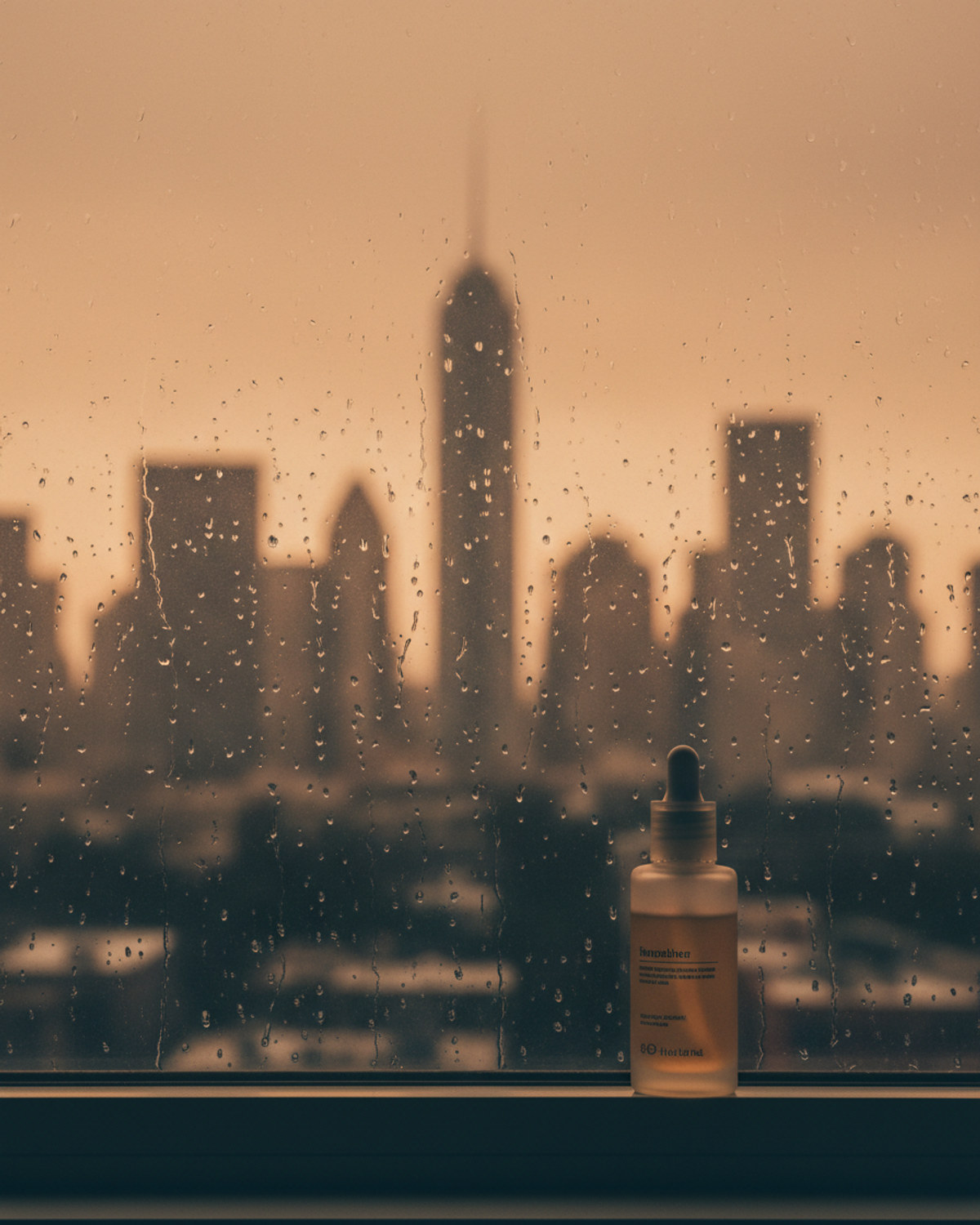
A poor air quality reading in New York this week echoes the July 2026 wildfire smoke event that pushed the city's AQI to 155. Here is what the research says PM2.5 actually does to skin, and which routine steps hold up.
Why New York's Air Quality Is Flagged Again This Week
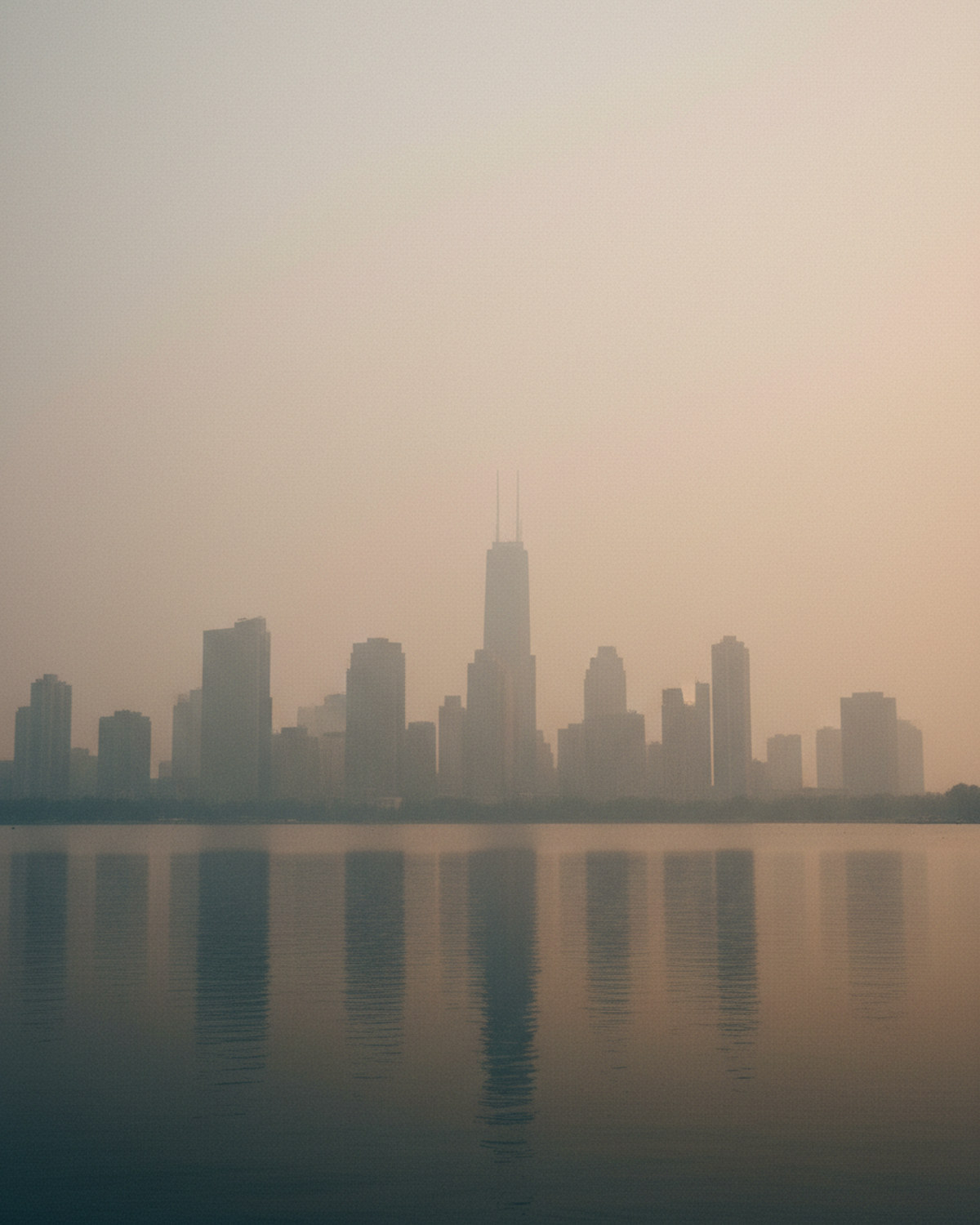
New York City is showing a poor air quality reading again, alongside elevated UV in Chicago and Los Angeles this week. It is a familiar pattern for the city: in mid-July 2026, smoke from wildfires burning across western Ontario pushed the five boroughs' Air Quality Index to 155, squarely in the unhealthy range, according to a July 15 advisory covered by amNewYork [2]. The day before that smoke arrived, New York City Emergency Management had already flagged ground-level ozone at 105 and issued a combined heat and air quality advisory, opening nearly 600 cooling centers and distributing free KN95 masks at library branches citywide [1].
That event is a preview of what a poor-air-quality reading now means for skin, not only for lungs.
What PM2.5 Actually Does Once It Lands on Skin
The particulate matter behind these advisories, PM2.5, is small enough, under 2.5 micrometers, to move past skin's outer defenses. A 2025 review of the research describes these particles generating reactive oxygen species that trigger oxidative stress, activate the ROS/MAPK and COX2/PGE2 signaling pathways, and raise levels of enzymes that break down collagen and elastin in skin's supportive matrix [3]. The same review points to a more specific mechanism behind the tightness and rough texture people report on smoky days: PM2.5 interferes with filaggrin, a protein that helps hold outer skin cells together, and damages the tight-junction proteins that seal the barrier [3].
That is a structural problem, not a surface one. Wiping the face with a cloth clears visible soot but does nothing for particles that have already triggered a signaling cascade inside the tissue.
The Same Damage Pathway as UV, a Different Trigger
Dr. Shayan Cheraghlou, a New York City dermatology resident, has explained that pollution damages skin through many of the same mechanisms as UV radiation [5]. Both generate oxidative stress; both accelerate visible signs of aging with repeated exposure. The practical difference is that most people already plan around sun protection on a clear August afternoon and skip it entirely on a hazy one, even though UV rays still pass through smoke and haze [5].
Who Notices It First
Older skin, and any skin with a compromised barrier, is more exposed to this cascade, largely because it holds fewer barrier lipids to begin with [5]. That includes skin that has recently been exfoliated, is actively using a retinoid, or is simply dry from low indoor humidity, a common condition in New York apartments running air conditioning through a heat advisory at the same time smoke moves in [1]. For that skin, one smoky day can stack two stressors, heat-driven water loss and particulate exposure, at once.
What the Research Says About Niacinamide Specifically
Among ingredients studied against PM2.5 exposure, niacinamide has some of the most direct evidence. In laboratory testing on human keratinocytes, researchers found niacinamide dose-dependently blocked the reactive-oxygen-species surge triggered by particulate exposure, working in part through NADPH oxidase inhibition, and reduced resulting damage to lipids, proteins and DNA in the cells. The same study tracked intracellular calcium buildup and mitochondrial membrane stability, two markers of cell stress, and found niacinamide steadied both. Protective effects were measurable at a 100-micromolar concentration with no toxicity observed at that dose [4]. That is a narrower, more specific claim than pollution-defense marketing usually implies: it is evidence for one mechanism, tested on isolated skin cells exposed to particulate matter, not a guarantee against every effect of a smoky week. Other compounds under early research for the same PM2.5 pathway include plant-derived flavonoids such as quercetin and catechins, though the evidence base there is thinner and mostly limited to cell and animal models rather than skin applied directly [3].
A Practical Routine for Smoke and Haze Days
The advice that holds up across the research and the dermatology commentary is unglamorous:
- Cleanse in the evening with a gentle, non-stripping formula to physically remove particles before they sit on skin overnight, rather than skipping the step because the day felt like an indoor one [2].
- Layer an antioxidant serum, vitamin C and vitamin E are the most studied, under moisturizer on advisory mornings specifically, since the goal is neutralizing oxidative stress before exposure builds through the day [5].
- Keep a niacinamide-containing moisturizer in rotation when a smoke advisory is active or expected, given the specific PM2.5 research above [4].
- Do not skip sunscreen because the sky looks hazy. UV radiation passes through smoke, so a particulate matter advisory is not a break from UV exposure [5].
- Treat a combined heat and air quality advisory as a cue to spend more time indoors generally, which does more for skin than any single product swap [1].
When the Advisory Matters More Than the Routine
None of the above replaces attention to the advisory itself. When a city emergency management agency flags an AQI above 150, the guidance for older adults, children, people with existing respiratory or heart conditions, and outdoor workers is to limit outdoor time altogether [1][2]. On those days, an indoor air purifier does more for skin and lungs than a longer skincare routine.
The Takeaway
A poor air quality reading is not only a lung-health notice. It is a specific, studied trigger for oxidative stress and barrier disruption in skin, through a mechanism that overlaps UV damage, with at least one ingredient, niacinamide, backed by laboratory evidence of blocking part of that cascade. On the next advisory day: cleanse in the evening, layer an antioxidant in the morning, keep sunscreen on regardless of haze, and let the advisory itself, not just how skin feels, be the cue to spend more time indoors.