New York issued another ozone health advisory in August 2026 and ranks 12th worst in the nation for ozone. The chemistry shows ozone attacks skin's surface oil, not the follicles, which changes what actually helps on a high-ozone day.
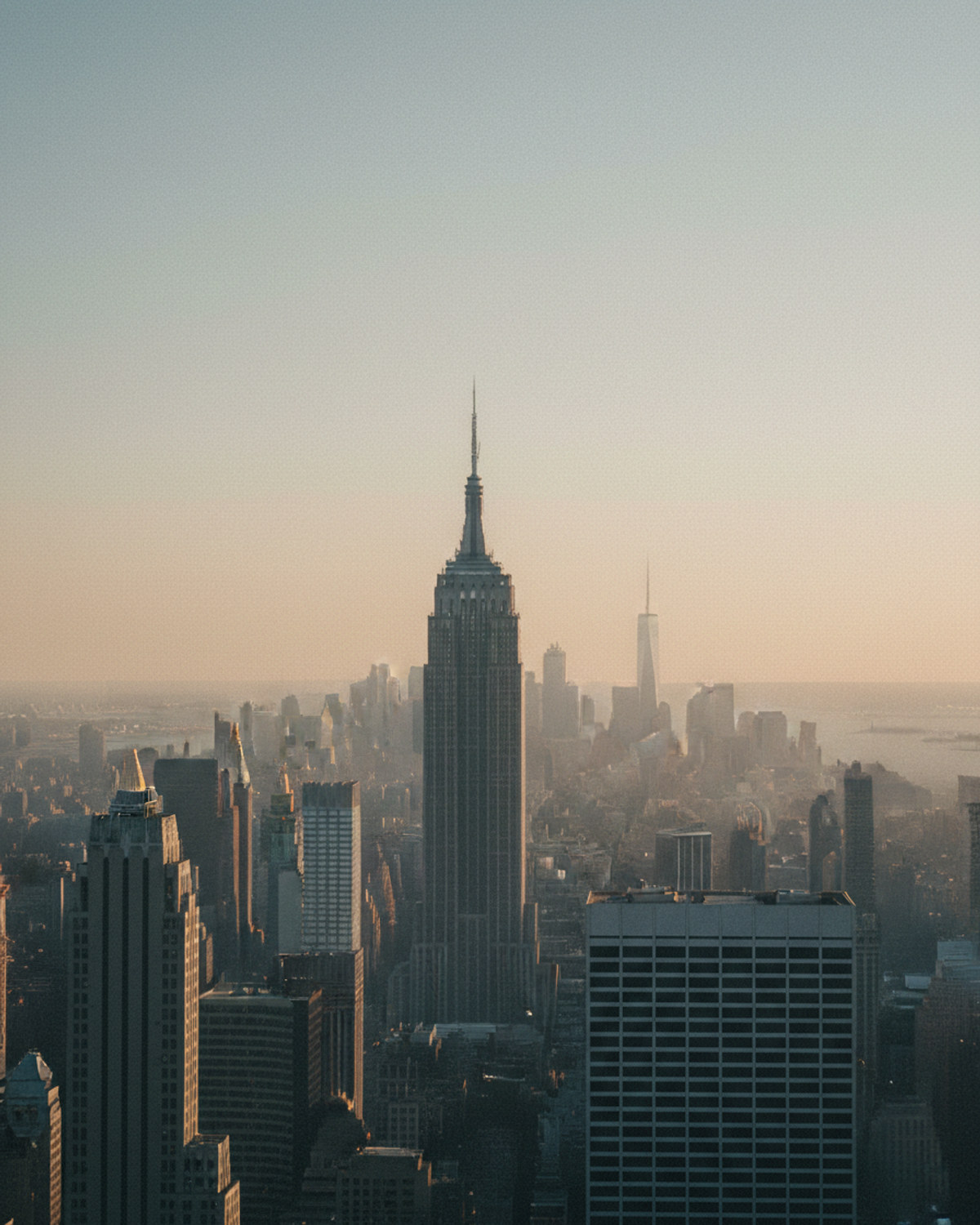
New York's air did not get cleaner when the leaves started turning. On August 8, 2026, the New York State Department of Environmental Conservation and the state Department of Health issued an Air Quality Health Advisory for the New York City metro region, warning that ozone levels would push the Air Quality Index above 100 through the afternoon and evening. That advisory landed well past the summer's worst heat, and it is part of a pattern: the American Lung Association's 2026 State of the Air report ranked the New York City-Newark metro area 12th worst in the nation for ozone out of 226 metro areas, even as the region's fine particulate pollution has improved by roughly 29 percent since 2009. Put plainly, New York's air problem in 2026 is disproportionately ozone, not soot, and that distinction matters more for skin than most pollution advice acknowledges.
Two Pollutants, Two Different Ways Skin Responds
Most skincare content about city air lumps ozone and fine particulate matter (PM2.5) together under one umbrella of pollution and skin damage. The chemistry does not support treating them as interchangeable. PM2.5 is solid and liquid particulate small enough to travel into hair follicles, reaching depths of roughly 200 to 500 micrometers below the surface, where it can interact with sebum and trigger oxidative and inflammatory responses. Ozone, by contrast, is a reactive gas that never has to penetrate anything. It reacts directly at the skin's surface, in the thin film of oil sitting on top of the stratum corneum, within seconds of contact. One pollutant works from the outside in through a delivery route; the other reacts on contact. That is why the same routine advice, wear a barrier cream and call it done, misses half the picture on a day when ozone rather than particulate matter is the dominant pollutant, which is exactly what New York's monitoring data shows for most of this year.
What a Redness Study From Taiwan Actually Measured
The clearest evidence connecting PM2.5 to visible redness comes from a study of 472 residents in two Taiwanese communities, published in PLOS Global Public Health in March 2025. Researchers used a VISIA imaging system with polarized light to score redness area on participants' faces, then compared those scores against each person's estimated residential PM2.5 exposure. Among adults aged 20 to 59, every one-unit increase in PM2.5 corresponded to a 1.70-unit increase in measured redness area; among adults over 60, the increase was steeper, at 2.63 units per unit of PM2.5 (both statistically significant). The study also found that sebum levels, measured as porphyrins, were linked to redness only in the younger group, supporting the follicular, oil-mediated route described above. This is a real, published association, not a study about a specific skin condition, and it says nothing about ozone. It is squarely about particulate matter reaching oil-rich areas of the face.
The Chemistry Behind an Ozone Day: Squalene Under Attack
Squalene is the single largest lipid component of human skin oil, and it is also the skin's first line of defense against ozone. A 2024 Environmental Science and Technology study placed human volunteers in a controlled exposure chamber and measured their skin oil before and after ozone exposure, finding statistically significant drops in squalene concentration on exposed skin relative to pre-exposure levels. Earlier PNAS research on the underlying chemistry showed that ozone reacting with squalene on skin produces a specific set of byproducts, including acetone, 6-methyl-5-hepten-2-one, geranyl acetone and 4-oxopentanal, several of which are the same compounds responsible for the distinct smell some people notice on themselves after time outdoors on a high-ozone day. The 2024 chamber study also found some reassurance: at typical outdoor ozone concentrations, the skin's natural oil resecretion roughly kept pace with squalene loss, so the depletion was measurable but not necessarily dramatic on a single exposure. Repeated high-ozone days across a season are a different question than one afternoon outside.
Reading New York's Real-Time Numbers Before You Plan a Day Outside
New York State's Department of Environmental Conservation publishes same-day and next-day AQI forecasts for ozone and PM2.5, and issues a formal health advisory whenever either pollutant is forecast to exceed an AQI of 100. That threshold is worth learning rather than guessing at: below 100, air is generally considered acceptable for most people; above it, the state specifically flags sensitive groups, including anyone who already notices reactive or easily flushed skin, for extra caution. Checking the forecast before a long outdoor commitment, a run, a wedding, a day at a street fair, takes under a minute and tells you which pollutant is driving the number, which changes what is actually useful to put on skin that day.
What Antioxidant Layering Can Realistically Do
The same 2024 chamber study that measured squalene depletion also tested protective formulations, and found that a commercial sunscreen and a base lotion containing antioxidants reduced the yield of ozone-driven oxidation byproducts by 25 to 70 percent compared with bare skin. That is a meaningful, sourced reduction, not a vague promise. It supports a narrow, specific claim: a topical layer containing antioxidants and photostable actives may help blunt surface-level ozone oxidation on a high-ozone day, on top of whatever sun protection it is already providing. It does not mean a serum can substitute for reducing exposure time, and it says nothing about particulate matter's follicular route, which is a separate mechanism entirely.
A Same-Day Routine for a High-Ozone Afternoon
On a day New York's forecast flags ozone above 100: cleanse thoroughly that evening to remove the day's accumulated surface oxidation products, since they sit in the same oil layer ozone just reacted with. Apply a sunscreen or daytime lotion containing antioxidants before heading out, given the 25 to 70 percent reduction in oxidation byproducts observed under lab conditions. Keep barrier-supporting ingredients, like ceramides or niacinamide, in the evening routine to help skin recover overnight. On days when the advisory names PM2.5 rather than ozone, specifically during wildfire smoke events, prioritize a proper double cleanse instead, since that pollutant's route runs through follicles and sebum rather than surface oil alone. If skin looks persistently flushed on repeated high-pollution days rather than just one, that pattern is worth mentioning to a doctor rather than working around indefinitely with products alone.
The Takeaway
New York's 2026 air quality story is specifically an ozone story, backed by a formal state advisory in August and a national ranking that puts the metro area 12th worst for ozone even as particulate pollution has improved. Ozone and PM2.5 reach skin through different routes, cause different chemistry, and call for different responses: surface-level antioxidant protection and evening cleansing for ozone days, follicular-focused cleansing for particulate-heavy smoke days. Checking which pollutant is actually elevated, rather than treating every bad-air day identically, is the specific, current habit worth building into a routine this fall.