Retinol percentages may not appear on the label at all. Here is what published research says about forms, stability and tolerability, and a checklist for comparing products.
A retinol serum can list 0.3%, 'high strength' or nothing at all, and the ingredient list rarely settles which you are buying. This guide covers what a retinoid label can and cannot tell you, using published research on how these ingredients behave, so that you can compare products on more than the front of the bottle.
The label may not give you a number
The American Academy of Dermatology notes that there is no standard requirement for the retinol percentage to be disclosed on the label or packaging of over-the-counter products, and it suggests choosing the lowest strength available when you start. That has a practical effect: two products both marketed as retinol serums can differ a great deal in strength, and you may only learn this by how your skin reacts.
If the percentage is not printed, look for it on the brand's own product page or in its customer service answer. If neither states it, treat the product as unknown strength and use the slowest schedule below.
Retinol is a precursor, not the finished active
A review of retinoids in skin aging describes the pathway: retinol is oxidized to retinaldehyde (retinal), which is oxidized to retinoic acid, the form that acts on skin cells. The same review states that retinol is 20 times less potent than tretinoin and must be converted in the skin to act. So a number on the bottle is the amount of a precursor, not the amount of final active that reaches skin cells.
Two things follow. First, comparing 0.5% retinol to a prescription retinoid by percentage alone is meaningless. Second, the label's ingredient name matters: retinol, retinal or retinaldehyde, and retinyl esters such as retinyl palmitate are different molecules at different distances from retinoic acid. The review explains that retinol derivatives were developed to improve chemical stability.
Stability: the quiet variable
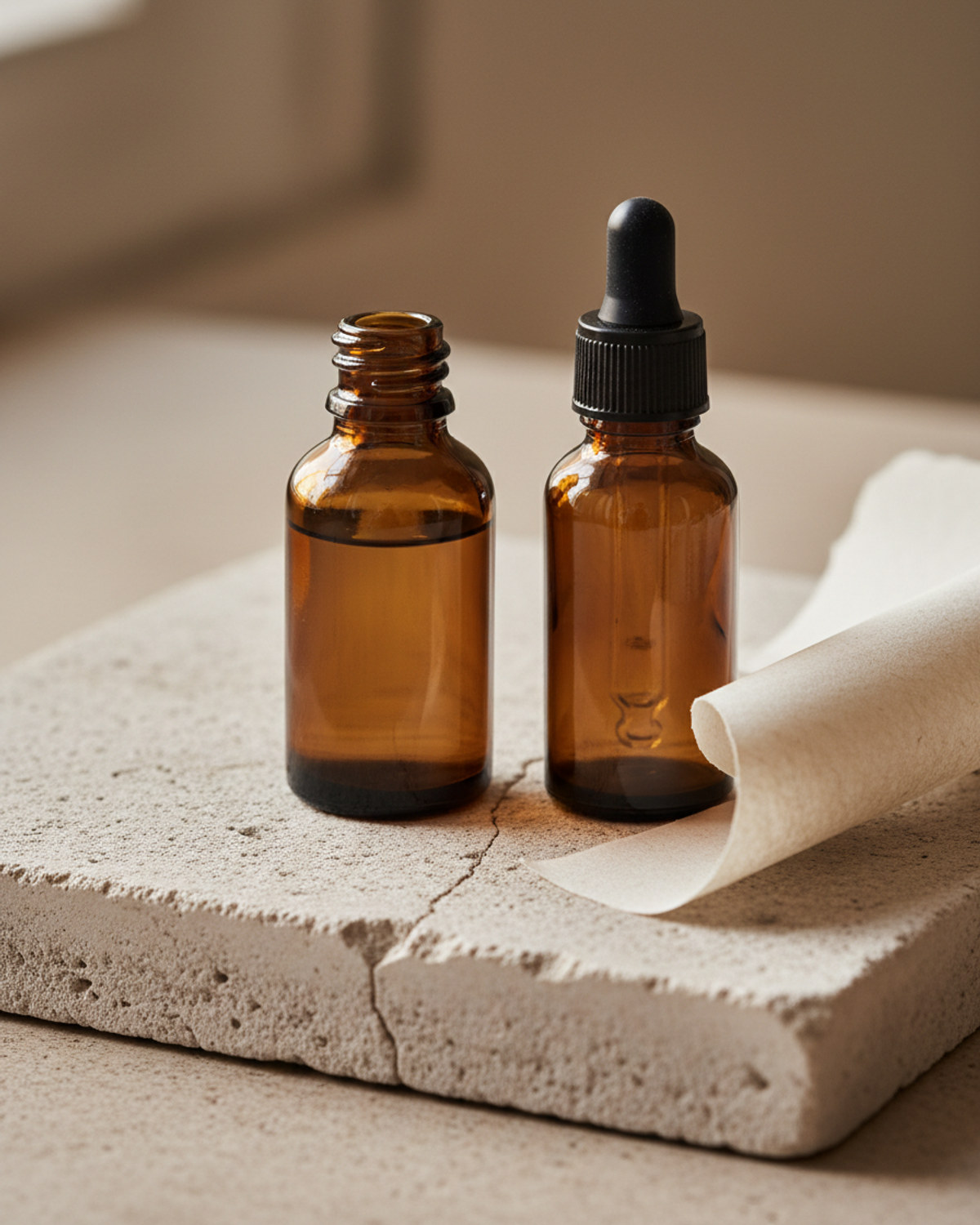
Retinol is described in that review as extremely unstable and easily degraded to biologically inactive forms by light and air. This is a packaging question you can read straight off a shelf:
- Opaque tubes or pump bottles beat clear jars that are opened daily.
- Airless pumps limit repeated exposure to air.
- Bathroom windowsills in the sun are a poor storage spot.
- A product that has changed smell or color is not worth continuing.
I could not find a published figure for how fast a typical retail retinol product loses potency, so treat any specific shelf-life claim from a brand as unverified.
What tolerability data say about the form you choose
A 1999 paper in Dermatology compared retinol, retinaldehyde and retinoic acid. In a 14-day patch test with 6 people, retinol and retinaldehyde showed low irritation while retinoic acid showed a more pronounced irritant effect (p < 0.05). In a 44-week study of 355 people, retinaldehyde was significantly less likely than retinoic acid to cause redness, scaling and burning in the first four weeks (p < 0.0001); retinoic acid users reported redness in 44%, scaling in 35% and burning or itching in 29%. That second arm did not include retinol, so it cannot rank retinol against retinal.
The takeaway for label reading: the milder over-the-counter forms are the reason these products exist as cosmetics, and they are also the reason results are gradual.
Reading the rest of the ingredient list
The retinoid is only one line in a formula. Water-based serums, oil-based serums and creams all deliver it differently, and the supporting ingredients change how the product feels on skin. A thick cream with a moisturizing base may feel more comfortable at the same stated strength than a thin alcohol-heavy serum, though I found no controlled study comparing vehicles for over-the-counter retinol, so that is a practical observation rather than a proven rule. Where you see added fragrance or exfoliating acids, count those as extra variables when judging whether a reaction came from the retinoid itself. Changing one product at a time makes it far easier to tell what your skin is responding to.
A label checklist before you buy
- Form: is it retinol, retinal or a retinyl ester? Each sits at a different conversion distance.
- Percentage: printed or not? If not, assume the lowest-strength routine.
- Packaging: opaque and airtight over clear and open.
- Company fine print: does the brand cite any study, and can you open it? Be wary of a multiplier like 'ten times stronger' with no reference.
- Companions: fragrance, exfoliating acids and other actives in the same formula add to irritation risk, and Cleveland Clinic advises using one retinol product at a time.
A starting routine that works with any label
Cleveland Clinic suggests a patch test first, then a pea-sized amount at bedtime, every other day for the first couple of weeks, followed by a non-clogging moisturizer. The same page says it takes several weeks to see a change in the look and feel of skin, that skin may look worse before it improves, and that changes in the look of wrinkles usually take several months. The AAD adds that retinoids are used at night and that daytime sun protection is needed, with broad-spectrum SPF 30 or higher and a mineral sunscreen if skin is sensitive. Both sources discourage retinoid use during pregnancy; talk to your doctor about products during pregnancy.
The takeaway
The label is a starting clue, not a measurement. Because strength may be undisclosed, retinol is a precursor that must be converted, and the molecule degrades with light and air, the safest buying rule is simple: pick a named form, opaque packaging and the lowest stated strength, use it every other night, and judge it over months.