

Sun & UV
High UV in Miami in November: Why the Forecast Number Beats the Thermometer
Miami is reading a high UV index in early November. Here is what the EPA, WHO, CDC and FDA say to do about it, and how to build a simple layered routine.
6 min read
Sunscreen that balls up or slides under foundation usually comes down to layering and timing, not dose. Here is how to keep the full amount on your face and still get smooth makeup.
· 5 min read
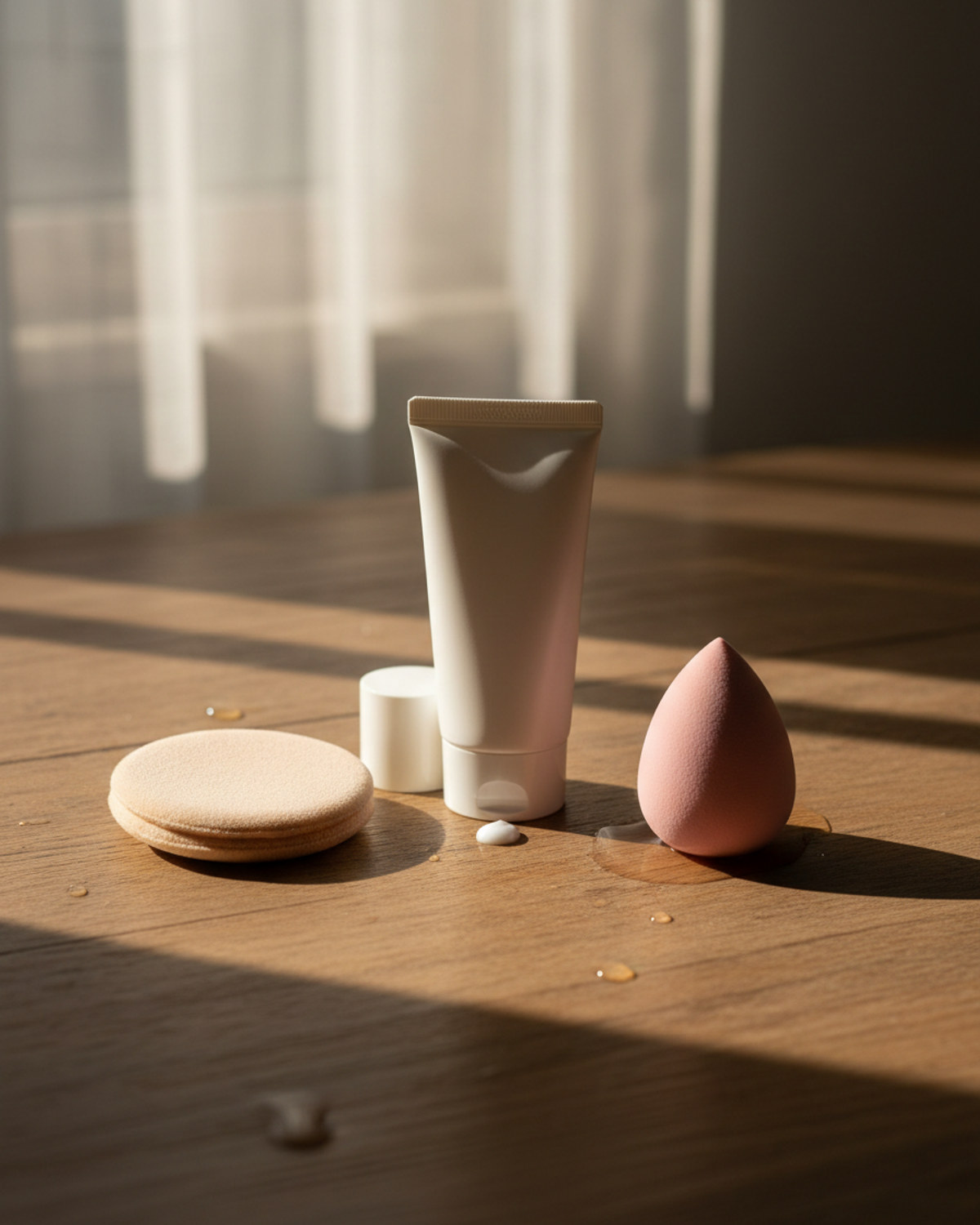
Sunscreen that slides, pills or turns foundation patchy is one of the most common reasons people skip SPF on days they wear makeup. The usual fix people try is using less, and that is the one fix that works against you. This guide covers why the layers separate, how to prevent it without shrinking your dose, and how to reapply over makeup without starting over.
Pilling is mostly physics, not a sign that a product is bad. Each skincare step leaves a thin film on the skin, and when several films stack up, rubbing can roll them into small flakes. One formulation-focused explainer notes that pilling usually begins when the layers beneath the sunscreen have not fully absorbed, and that silicones, thick emollients and polymer gels reduce the grip between layers. Friction matters too: sponges, brushes and vigorous rubbing all raise the odds that a film shears off.
Makeup adds another layer. Silicone-heavy primers and long-wear foundations can slide over a sunscreen that has not set, which shows up as streaks around the nose and chin, where skin moves most and oil collects.
It is tempting to apply a pea-sized dab to avoid the slippery feeling. But SPF ratings are measured at 2 mg of product per square centimeter of skin. In a King's College London experiment with 16 fair-skinned volunteers, researchers tested thicknesses of 0.75, 1.3 and 2 mg/cm2, and reported that an SPF 50 product applied at typical consumer thickness would give at best about 40 percent of the protection expected from its label. The team suggested people may benefit from choosing a higher SPF than they think they need. This was a small study, but it matches a basic principle: protection scales roughly with how much you apply, so a thinner layer gives proportionally less.
For the face, the American Academy of Dermatology advises at least 1 teaspoon, with broad-spectrum, water-resistant SPF 30 or higher. If that amount feels like too much to wear under makeup, the solution is a more elegant formula and better technique, not a smaller dose.
Because underlayers that have not absorbed are the leading suspect for pilling, keep the routine beneath sunscreen short and light on mornings you wear makeup. A gel or lotion moisturizer usually layers better under SPF than a rich cream or an oil. If you use a serum with a tacky, polymer-like feel, give it extra time to dry before moving on.
Rather than one thick coat, many people find it easier to apply the full teaspoon in two thinner layers, letting the first settle for a minute before the second. The total dose stays at the recommended level, but each layer sets more evenly.
The next step is patience. A few minutes of drying time lets the film set so that foundation glides over it instead of lifting it. If your routine allows, use that gap to do something else, such as brushing your teeth or getting dressed. Pressing makeup on with a damp sponge or patting with fingertips disturbs the layer less than dragging a brush across it.
Not every sunscreen and base play well together. A few patterns to watch for:
Tinted sunscreens can also simplify things, since they replace one makeup layer. Just remember that the shade is only a bonus: the SPF number is tested at the full dose, so you still need the full amount.
The AAD advice is to reapply approximately every two hours, and after swimming or sweating. Over makeup this is the hardest part. One cosmetic-science writer sorts the options by evidence and practicality:
The same source considers foundation alone unlikely to give enough protection, and points out that powders deliver a small amount of product with uneven coverage. If dirt or excess product has built up midday, blot with a makeup wipe before adding more.
Putting it together for a day you plan to wear makeup:
The takeaway is simple: separation is usually a layering and timing problem, so fix those rather than cutting the dose. Sunscreen only gives the protection on its label when enough of it ends up on the skin.
Rituelle reads your skin over time and adapts your routine to it.
Join the waitlistSun & UV
Miami is reading a high UV index in early November. Here is what the EPA, WHO, CDC and FDA say to do about it, and how to build a simple layered routine.
6 min read
Sun & UV
The two-hour rule is clear, but doing it over foundation is not. Here is what FDA, AAD and a dermatologist say about powders, sprays and the amount problem.
5 min read

Decoding Labels
Tone-up creams are still around, but a pink brightening base is not automatically sun protection. Three label checks, grounded in FDA guidance, separate real sunscreen from makeup.
5 min read