

Sun & UV
High UV in Miami in November: Why the Forecast Number Beats the Thermometer
Miami is reading a high UV index in early November. Here is what the EPA, WHO, CDC and FDA say to do about it, and how to build a simple layered routine.
6 min read
Sticks are convenient, but a hands-on test found one layer delivered under half the amount the SPF rating assumes. Here is how to use one properly and where it fits.
· 5 min read
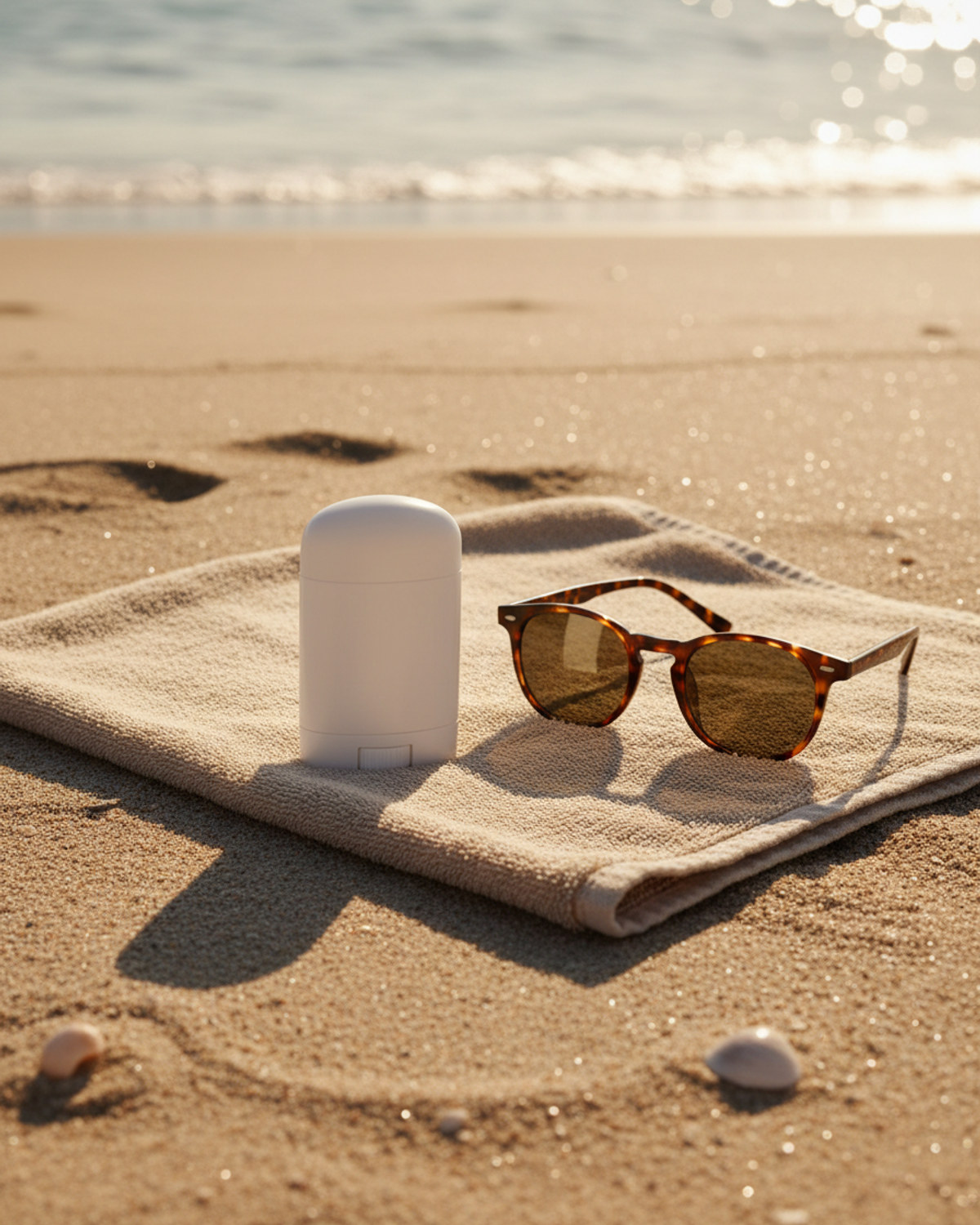
Sunscreen sticks are easy to love: no spills, no sticky palms, and a swipe you can do in the car. They are also easy to under-apply, and that matters because the number on the label assumes a specific amount of product. Here is what a hands-on test, dermatology guidance and the FDA say about getting a stick to deliver the protection it advertises.
SPF values are determined at an application density of 2 mg of sunscreen per square centimeter of skin. A UCI Health dermatologist explains that the amount is easy to picture with a lotion but hard to judge with a stick, so most people making a few passes are unlikely to reach full coverage compared with a liquid. The ingredients are not the problem: high-SPF sticks generally contain the same UV filters as the top lotions. The shortfall is quantity.
The FDA's own guidance is written for whole-body use: an average adult needs at least one ounce, about a shot glass, to cover the body, applied 15 minutes before sun exposure and reapplied at least every two hours, or more often when swimming or sweating. The agency lists sticks among many forms and adds that directions vary by form, so the label is the authority.
Michelle Wong of Lab Muffin Beauty Science weighed how much product she actually put on her face. Her face needs about 0.76 g to hit the labelled SPF at 2 mg per square centimeter. She tested three Korean SPF 50+ sticks, applied generously, and found these averages:
Even three full layers fell short of the labelled SPF 50, and the first layer delivered well under half the needed amount, which surprised the tester. A lotion, by her account, takes about 60 seconds to apply the full 0.76 g.
This is one person, three sticks, and she watched the results as she collected them, so treat the SPF equivalents as illustrative rather than a lab measurement. The direction of the result is still useful: one swipe is not one dose.
The American Academy of Dermatology suggests four passes back and forth over each area, a rule repeated by the Prevent Cancer Foundation. In the Lab Muffin test, one layer took about nine passes of the face on average, and she calls the four-pass figure a big underestimate. Her arm tests suggested anywhere from about 16 to 64 passes depending on the stick. Her conclusion is that pass counts are not a good guideline, because sticks differ in how much they leave behind per pass.
Sticks are not a bad product, they are a specialized one. The sources agree on where they shine:
The tester's view is that a stick is not a good choice as your main protection if you get a lot of sun. UCI Health also warns that sticks can feel like a thick layer on the face, which makes them less comfortable for daily use.
In the same test, sticks left gaps in the middle of the nose, under the brow bone, in the eyebrows, at the hairline and beside the nostrils. The FDA's list of commonly missed areas includes ears, the back of the neck, hands, tops of feet, hairline and exposed scalp. Combine the two lists and you have a checklist for a mirror check before heading out.
A sunscreen stick works as a convenient reapplication and detail tool, not as a one-swipe replacement for lotion. If it is your main product, put on several layers, blend them, and cover the spots it misses. A single pass leaves you with far less protection than the label implies.
Rituelle reads your skin over time and adapts your routine to it.
Join the waitlistSun & UV
Miami is reading a high UV index in early November. Here is what the EPA, WHO, CDC and FDA say to do about it, and how to build a simple layered routine.
6 min read
Sun & UV
The two-hour rule is clear, but doing it over foundation is not. Here is what FDA, AAD and a dermatologist say about powders, sprays and the amount problem.
5 min read

Decoding Labels
Tone-up creams are still around, but a pink brightening base is not automatically sun protection. Three label checks, grounded in FDA guidance, separate real sunscreen from makeup.
5 min read