

Sun & UV
High UV in Miami in November: Why the Forecast Number Beats the Thermometer
Miami is reading a high UV index in early November. Here is what the EPA, WHO, CDC and FDA say to do about it, and how to build a simple layered routine.
6 min read
A 2026 audit of 37 tinted sunscreens found iron oxides rarely disclosed and visible-light claims rarely backed by public testing. Here is what the evidence says and how to shop around the gap.
· 5 min read
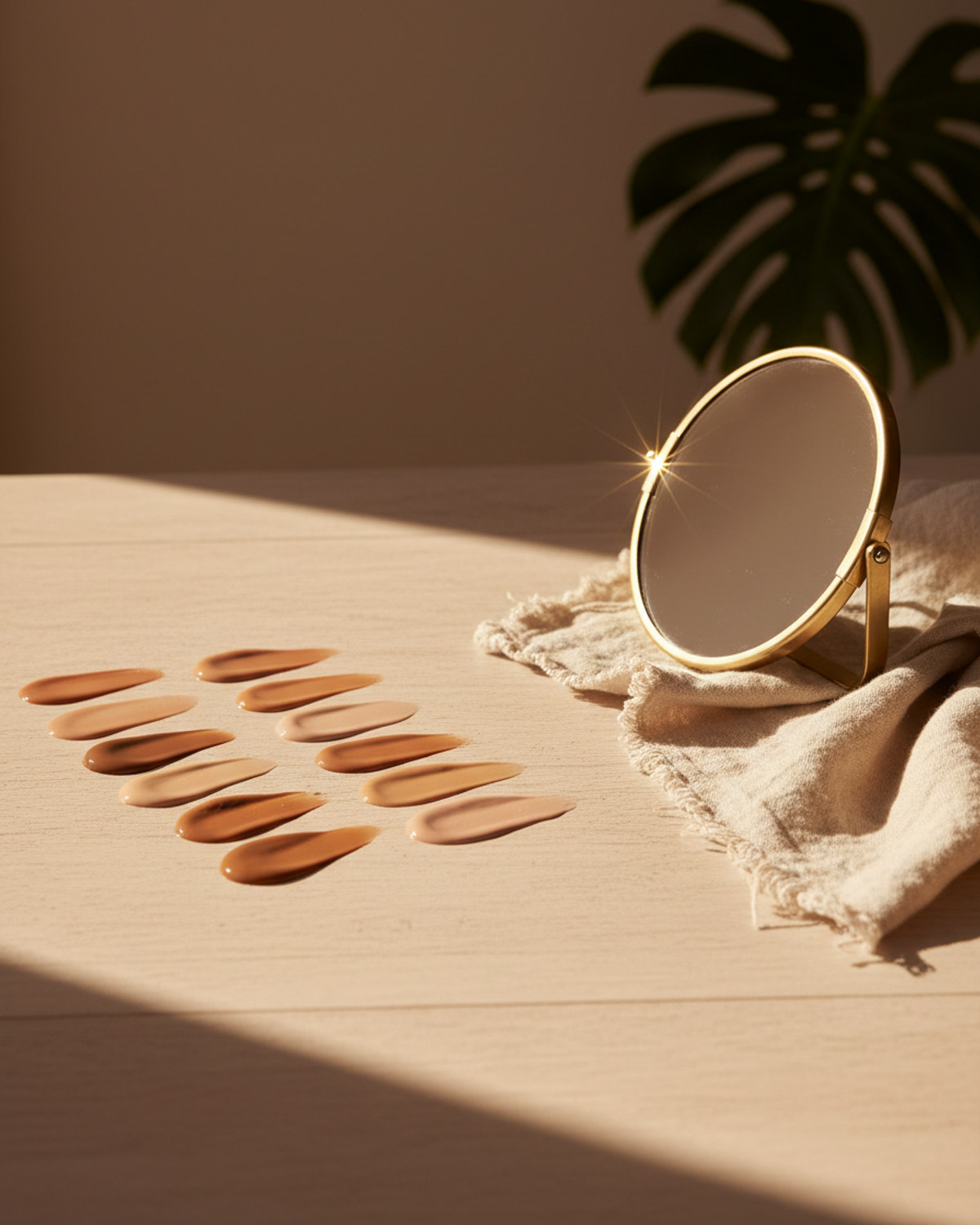
Most sunscreen conversations are about UVA, UVB and SPF numbers. A 2026 product analysis adds a quieter question for anyone who notices dark marks lingering on their skin: does your sunscreen do anything about visible light, and could you tell from the label? The short answer from the authors is that iron oxides appear to help, but the label usually will not tell you how much is in the bottle.
Visible light spans roughly 400 to 700 nm and makes up about 45% of sunlight. Its blue-violet end, often called high-energy visible (HEV) light at around 415 to 455 nm, is the part linked to long-lasting pigmentation. Skin cells that make pigment can sense blue light through a receptor called opsin 3, which then prompts pigment production, and the effect is described as strongest in deeper skin tones, Fitzpatrick phototype III and above.
Ordinary UV filters, including zinc oxide and titanium dioxide in clear or white formulas, are not designed around this range. That is the gap iron oxides are being used to fill.
The paper, published in the Journal of Drugs in Dermatology (volume 25, issue 5, May 2026), combined a literature review with an audit of 37 commercially available tinted sunscreens marketed toward people with deeper skin tones or pigmentation concerns. The numbers are striking:
The authors concluded that iron oxides improve visible-light protection in sunscreens for skin prone to hyperpigmentation, and called for standardized reporting of iron oxide content and visible-light testing. They also advised people with pigmentation concerns to look for sunscreens containing both zinc oxide and iron oxides.
The review cites clinical work where a sunscreen with UV plus visible-light protection reduced a discoloration severity score by 75%, compared with 60% for a UV-only sunscreen. This came from a single cited study of persistent patchy discoloration, so it is encouraging but not definitive.
Dermatology Times reported on a study run with a L'Oreal USA team in which iron oxide formulations protected people with deeper skin tones from visible-light-induced darkening better than a non-tinted mineral SPF 50+ sunscreen. The same article notes that the author works for L'Oreal, which sponsored the cited study, and that her own newer experiment was in vitro, meaning lab-based, so it does not directly show what happens on skin. Treat the manufacturer-linked work as supportive, not independent.
There is currently no official ISO or FDA standard for visible-light claims, so a bottle can say it helps defend against blue light without any agreed way to check. A proposed metric, called VL-PF, would compare pigmentation after visible-light exposure on protected and unprotected skin, but it is not a labeling requirement. The Dermatology Times author put it plainly: not all tinted sunscreens containing iron oxides are created equal in protection efficacy.
There are also limits to the audit itself. It relied on online labeling and on the 24 brands that answered, and brands that did not respond remain unknown. So the 97.3% figure describes online listings in this sample, not every sunscreen on the market.
Visible light is only one part of sun exposure. A tinted formula does not replace broad-spectrum SPF 30 or higher, generous application and reapplication about every two hours outdoors. Hats and shade still help. If dark marks are a persistent concern or are changing, ask a dermatologist to look at them.
Published evidence suggests iron oxides give sunscreens an edge against visible light for skin prone to dark marks, but the supporting research is partly manufacturer-linked, and the labeling is too opaque to compare products reliably. Until standards exist, the practical move is to choose a tinted, zinc-and-iron-oxide formula in a shade you will wear daily, check the ingredient list for the CI codes, and email the brand for the percentage if the claim matters to you.
Rituelle reads your skin over time and adapts your routine to it.
Join the waitlistSun & UV
Miami is reading a high UV index in early November. Here is what the EPA, WHO, CDC and FDA say to do about it, and how to build a simple layered routine.
6 min read
Sun & UV
The two-hour rule is clear, but doing it over foundation is not. Here is what FDA, AAD and a dermatologist say about powders, sprays and the amount problem.
5 min read

Decoding Labels
Tone-up creams are still around, but a pink brightening base is not automatically sun protection. Three label checks, grounded in FDA guidance, separate real sunscreen from makeup.
5 min read